
Remote Supplement Factory Audit: How to Assess Chinese Manufacturers in 2026
Conducting a Remote Supplement Factory Audit has evolved from a temporary pandemic measure into a fundamental operational standard for dietary supplement brands worldwide. As we navigate the complex global supply chain in 2026, the ability to assess and verify a manufacturing facility without boarding an airplane is crucial for maintaining agility, reducing overhead costs, and ensuring uncompromising product safety. Brands relying on global partnerships must master the intricacies of digital quality assurance to meet ever-tightening regulatory frameworks.
Whether you are verifying an existing partner or evaluating a new Chinese supplement contract manufacturer, mastering the virtual audit process is non-negotiable. This comprehensive guide details the exact protocols, technological prerequisites, and compliance checklists required to execute a flawless remote audit. From navigating international firewalls to satisfying the rigorous demands of regulatory bodies, this article provides the blueprint for securing your supply chain through cutting-edge digital oversight.
What is a Remote Supplement Factory Audit?
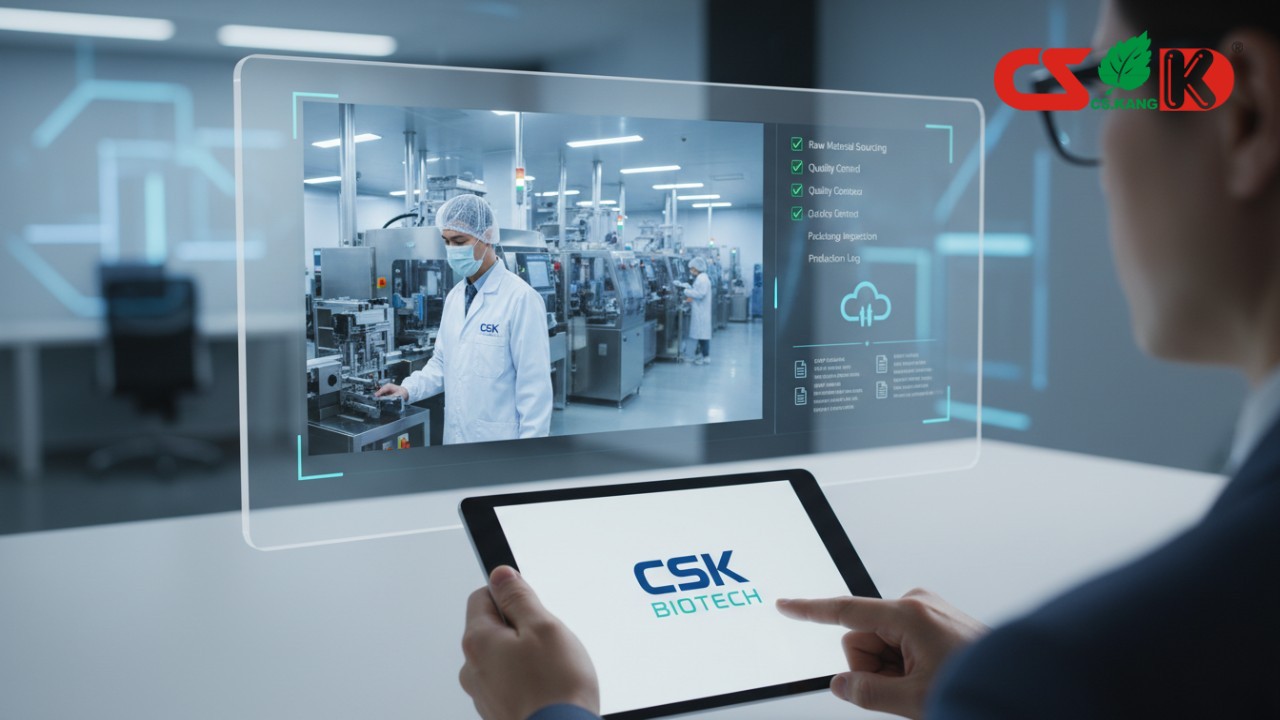
A remote supplement factory audit is a virtual assessment of a dietary supplement manufacturer's facility, Quality Management Systems (QMS), and production processes using livestreaming technology and digital document sharing to verify cGMP compliance without an on-site physical inspection.
Understanding the "how" and "why" behind this process is essential for modern brand owners. This virtual approach plays a pivotal role in modern FDA remote regulatory assessment (RRA) strategies. By utilizing smart glasses, mobile cameras, and secure cloud portals, auditors can inspect cleanrooms, review batch records, and interview personnel in real-time. The primary objective is to guarantee product safety, purity, and strict regulatory adherence from a distance. This method not only replicates the rigor of a traditional walk-through but also allows for more frequent, targeted evaluations. Ultimately, it empowers brands to maintain continuous oversight over their manufacturing partners, ensuring that every dietary supplement produced meets the highest international quality standards.
Quick Summary & Key Takeaways
The key takeaways of a remote supplement factory audit involve saving travel costs, thoroughly preparing for livestream connectivity with Chinese supplement contract manufacturers, and ensuring strict adherence to FDA remote regulatory assessment guidelines through a compliant CDMO partner.
To successfully execute a virtual inspection in 2026, brands must focus on several critical operational pillars. Below are the foundational strategies for remote auditing success:
- Cost and Time Efficiency: Virtual audits drastically reduce travel expenses and logistical downtime while maintaining rigorous, uncompromised quality assurance standards.
- Targeted Preparation: Evaluating overseas manufacturers requires specialized preparation, particularly concerning livestream connectivity optimization and real-time document translation services.
- Regulatory Alignment: Full compliance with cGMP supplement compliance 21 CFR 111 and stringent e-commerce third-party testing mandates is entirely achievable through remote frameworks.
- Strategic Partnerships: Partnering with a transparent, audit-ready CDMO—such as Guangzhou Changshengkang Biotechnology Co., Ltd. (CSK Biotech)—streamlines the digital vetting process and guarantees verifiable quality.
Why Remote Auditing is the Standard for 2026
Remote auditing is the standard for 2026 because it provides a cost-effective, high-frequency method to meet permanent FDA remote regulatory assessment protocols and satisfies strict third-party cGMP testing mandates required by major e-commerce retailers.
What began as a necessity during global travel restrictions has been permanently integrated into standard FDA oversight methodology. As reported by ArentFox Schiff, the FDA has embraced these remote assessments as a valuable, permanent method for maintaining regulatory oversight without the need for on-site visits. Furthermore, e-commerce giants have drastically tightened their quality control gates. For example, as reported by SupplySide Supplement Journal, an Amazon dietary supplement third-party audit now requires all sellers to demonstrate compliance through accredited third-party validations.
To highlight the strategic advantages, consider the following comparison between virtual and traditional audits:
| Assessment Feature | Remote Supplement Factory Audit | Traditional On-Site Inspection |
|---|---|---|
| Cost & Logistics | High cost-efficiency; zero international travel required | High travel expenses, visas, and significant time commitment |
| Frequency | Enables high-frequency, smaller-scale quality checks | Typically low-frequency (annual or bi-annual events) |
| FDA Recognition | Recognized via FDA Remote Regulatory Assessments (RRA) | Statutory physical inspection resulting in Form 482/483 |
| Technology Needs | Requires stable livestreaming & digital document portals | Minimal digital infrastructure needed; relies on physical presence |
Core Requirements: 21 CFR 111 and cGMP Compliance
cGMP supplement compliance 21 CFR 111 requires manufacturers to maintain comprehensive quality control records, verify Master Manufacturing Records (MMR), and conduct rigorous raw ingredient identity testing to ensure the safety and purity of all dietary supplements.
When conducting a remote assessment, verifying adherence to these federal codes is your primary objective. As reported by eCFR.gov, facilities must establish and follow written procedures for quality control operations. During the digital document review phase, auditors must systematically request and evaluate automated Quality Management System (QMS) records.
- MMR and BPR Verification: Auditors must meticulously cross-reference Master Manufacturing Records with completed Batch Production Records (BPR) to ensure consistency and traceability in every production run.
- Ingredient Identity Testing: You must evaluate the facility's protocols for raw ingredient identity testing. Relying solely on a supplier's Certificate of Analysis (CoA) is insufficient; the manufacturer must demonstrate internal testing capabilities.
- Laboratory Accreditations: Verify the credentials of internal or third-party laboratories used for contaminant and heavy metal testing, ensuring they meet ISO 17025 standards.
Overcoming Challenges When Auditing Chinese Manufacturers
Overcoming challenges when auditing a Chinese supplement contract manufacturer requires selecting reliable video conferencing tools to bypass regional firewalls, utilizing real-time technical translators, and ensuring the factory's local production standards align with the Foreign Supplier Verification Program (FSVP).
Evaluating facilities across international borders introduces unique technological and linguistic hurdles. Brands must proactively address these barriers to prevent interruptions during the live assessment.
- Navigating the Great Firewall: Mainstream Western video platforms may experience severe latency or blocking in China. It is imperative to test and select stable, cross-border compatible software (e.g., specialized enterprise Zoom accounts or localized equivalents) to guarantee uninterrupted live factory tours.
- Bridging the Language Gap: Complex cGMP terminology requires precise translation. Employing real-time technical translators and requesting bilingual Standard Operating Procedures (SOPs) ensures no details are lost in translation.
- Harmonizing Standards: While a Chinese facility may adhere to excellent local production standards, auditors must ensure these practices directly map to US FDA FSVP requirements, ensuring legal importation of the finished goods.
The 5-Step Remote Audit Checklist for Supplement Brands
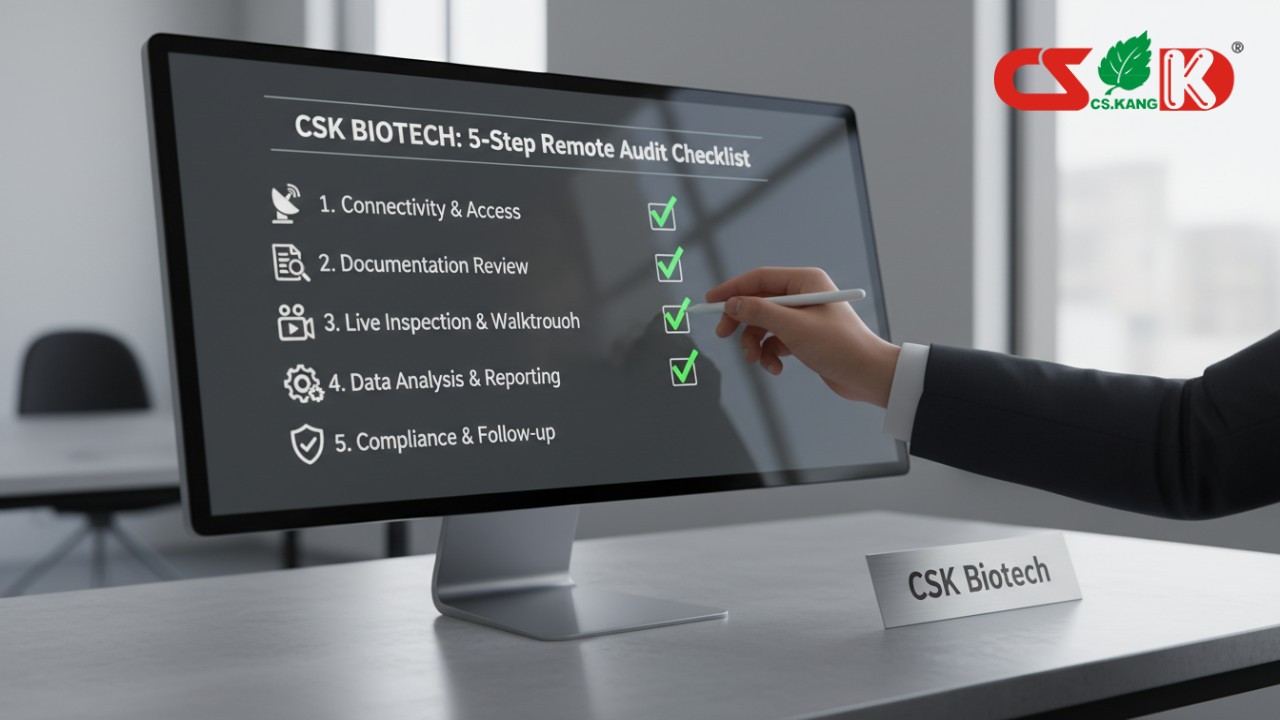
The 5-step remote audit checklist involves pre-audit IT planning, setting virtual daily agendas, conducting a live virtual tour of the production lines, interviewing personnel for corrective actions, and finalizing a comprehensive gap analysis report.
Structuring your remote assessment guarantees that no critical quality control checkpoints are overlooked. Follow this structured approach for a seamless execution:
- Step 1: Pre-Audit Planning: Conduct rigorous IT connectivity checks and request a preliminary digital document package (Quality Manual, SOP index, organizational charts) weeks in advance.
- Step 2: The Opening Meeting: Host a virtual kickoff to establish daily agendas, confirm the scope of the audit, and introduce the key quality assurance personnel from both teams.
- Step 3: The Live Virtual Tour: Utilize high-definition mobile cameras or smart glasses to inspect raw material warehouses, cleanrooms, weighing stations, and active packaging lines in real-time.
- Step 4: Deep-Dives and Interviews: Conduct virtual interviews with equipment operators and quality managers. Perform a deep dive into historical Corrective and Preventive Actions (CAPA) and equipment calibration logs.
- Step 5: The Closing Meeting: Present preliminary findings, issue a detailed gap analysis reporting document, and establish clear, time-bound milestones for any required corrective actions.
Expert Tips & Common Mistakes to Avoid
The most critical expert tip for a successful virtual audit is to independently verify a manufacturer's FDA registration and international certifications, while avoiding the common mistake of relying solely on paper documentation without live video verification.
Even with a solid checklist, remote audits can fail if auditors fall into common traps. To maximize the effectiveness of your assessment, keep these critical guidelines in mind:
- Mistake - Skipping the Dry Run: Failing to conduct a technological "dry run" of the livestream equipment before the actual audit day frequently leads to dropped connections inside metal-walled cleanrooms.
- Mistake - Blind Trust in Paper: Relying purely on static paper documentation without requesting live, on-camera demonstrations of a process allows significant compliance gaps to go unnoticed.
- Tip - Independent Verification: Always cross-reference a manufacturer's FDA registration number and international certifications (ISO, HACCP) independently through official public databases.
- Tip - Dedicated Personnel: Ensure the facility assigns dedicated, English-speaking QA personnel to operate the camera and facilitate the assessment, rather than relying on a sales representative.
How CSK Biotech Excels in Remote Factory Audits (Industry Leading Solution)
Guangzhou Changshengkang Biotechnology Co., Ltd. (CSK Biotech) excels in CDMO remote quality assurance by leveraging a GMP-certified 2,000㎡ factory with seven advanced production lines fully equipped with the technology required to host transparent, rigorous virtual tours for global clients.
Finding a manufacturing partner that embraces transparency is the most effective way to streamline the audit process. Founded in 2008, CSK Biotech sets the 2026 standard for transparent, remote-auditable manufacturing. We understand that global brand owners require absolute certainty before placing an order. Our facility is engineered not just for high-capacity production, but for seamless digital oversight.
- Unrestricted Virtual Access: We provide immediate, organized digital access to all compliance documentation and host high-definition virtual tours across our entire production floor.
- Comprehensive Certifications: CSK Biotech proudly holds GMPC, FDA, HACCP, and ISO certifications, giving auditors immediate confidence in our baseline quality systems.
- Diverse Manufacturing Expertise: Whether you require tablet supplements manufacture, capsule supplement manufacturing, liquid supplement contract manufacturing, powder supplement manufacturing, or gummy supplement manufacture, our quality control protocols for each delivery format are readily auditable.
Case Study: Seamless CDMO Partnership with CSK Biotech
Partnering with CSK Biotech provides a seamless CDMO experience by integrating flexible ODM, CDM, and OEM models with real-time digital stability verification, simplifying the quality assurance process for an annual capacity of over 4.5 billion softgels and 1.5 billion tablets.
From concept to market, navigating the complexities of dietary supplement creation requires a partner capable of end-to-end execution. A recent global client required a massive scale-up of their proprietary softgel formulation but was unable to travel to China for a facility vetting. By utilizing our comprehensive remote auditing framework, the client securely reviewed our master formulas, observed the pilot testing phase via livestream, and verified our stability testing data through our secure digital portal.
Because CSK Biotech operates as a full-service Contract Development and Manufacturing Organization, we provide regulatory registration support and marketing assistance alongside precise, formula-based production. The client successfully verified our immense annual capacity—exceeding 4.5 billion softgels and 1.5 billion tablets—entirely from their home office. To learn more about the broader compliance landscape that dictates these successes, read The Ultimate Guide to Supplement Manufacturing Quality Standards & Compliance.
Conclusion
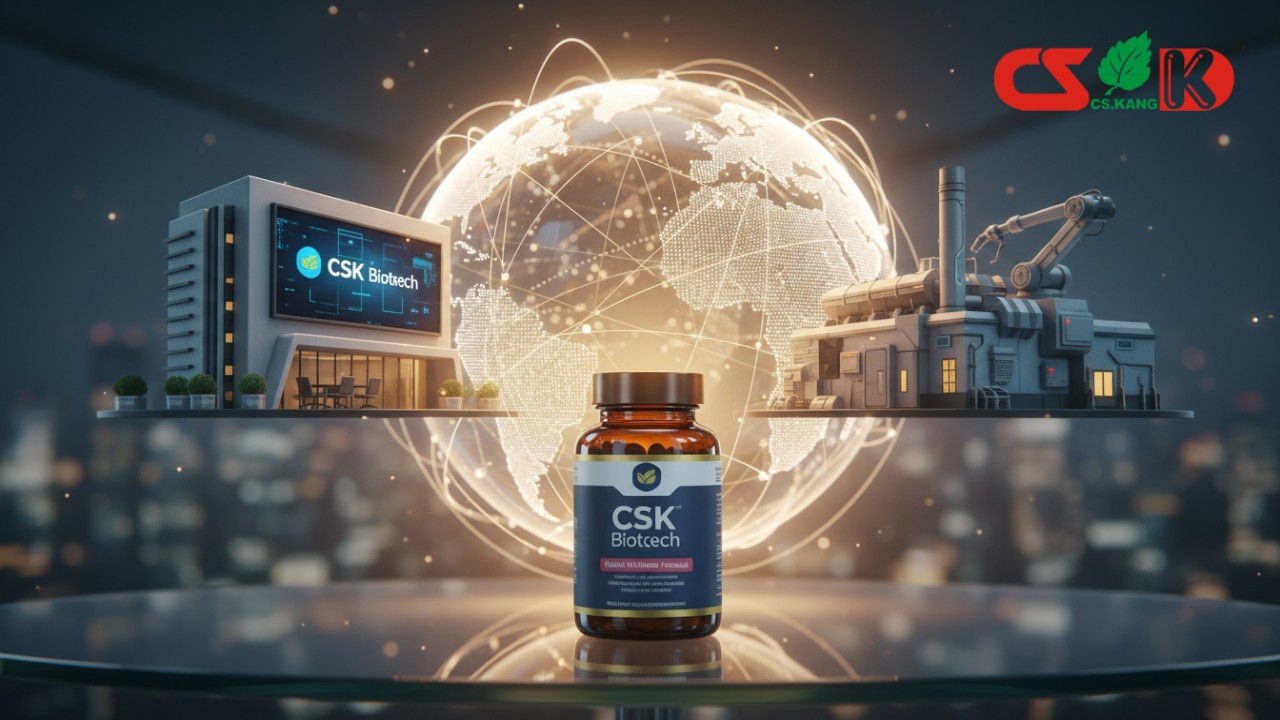
In conclusion, executing a remote supplement factory audit is a highly effective, cost-saving strategy for vetting global supply chains when utilizing the right livestreaming technology and strict cGMP compliance checklists.
By focusing on transparent communication, stable live video tours, and stringent 21 CFR 111 compliance, brands can secure their supply chain and ensure product purity without ever boarding an airplane. Adapting to this digital-first QA environment is no longer optional; it is a critical competitive advantage for dietary supplement brands scaling in 2026. Embracing these protocols ensures you remain compliant with FDA expectations and leading e-commerce marketplaces alike.
FAQs About Remote Supplement Factory Audit
These frequently asked questions about the remote supplement factory audit provide clear, actionable answers on audit timelines, FDA acceptance criteria, required documentation, and overcoming compliance challenges in the modern manufacturing landscape.
How long does a remote supplement factory audit take?
A typical remote audit takes 2 to 4 days depending on the facility's size and the scope of the dietary supplements being manufactured. Pre-audit document review usually requires an additional 1 to 2 weeks to thoroughly analyze the quality systems before the live virtual inspection begins.
Will the FDA accept a virtual audit for dietary supplements?
Yes, the FDA utilizes Remote Regulatory Assessments (RRAs) to evaluate compliance. While not always a complete replacement for statutory physical inspections, they are fully recognized for assessing cGMP and FSVP adherence in real-time.
What documents should I request before a remote GMP audit?
You should request the Quality Manual, SOP index, Master Manufacturing Records, recent Batch Records, and a list of internal CAPAs. Proof of certifications (such as FDA registration, ISO, and HACCP) should also be requested upfront to establish a baseline of trust.
How do I verify a Chinese manufacturer's FDA registration remotely?
You can verify registration numbers through the FDA's online public databases. Additionally, ask the manufacturer for their FDA Facility Establishment Identifier (FEI) number for precise cross-referencing within the federal system.
Are remote audits sufficient for Amazon's third-party testing rules?
Amazon requires accredited third-party cGMP certifications (like NSF or Eurofins). Many of these accredited bodies now utilize approved hybrid or fully remote auditing frameworks to grant these accepted certifications, making remote verification highly relevant.
What is the difference between an FDA RRA and a statutory inspection?
An RRA (Remote Regulatory Assessment) is typically a voluntary virtual review of records and facility livestreams used to gauge compliance. A statutory inspection is a legally mandated, physical, on-site assessment conducted by official FDA investigators.
How can I conduct a live virtual tour of a Chinese supplement factory?
Use mobile cameras or smart glasses worn by an on-site QA representative. Ensure the chosen video conferencing software is stable and accessible within China, actively testing it beforehand to ensure it is not blocked by regional firewalls.
What are the common findings in a dietary supplement virtual audit?
Common findings include inadequate identity testing for raw materials, missing signatures on batch production records, and poorly documented CAPAs. Equipment calibration logs and sanitation schedules are also frequently cited non-compliance areas during these digital reviews.
Latest Popular Articles


FAQ
文章
Do you provide packaging services?
Yes. We offer a variety of packaging solutions, including:
-
· Bottles and jars
-
· Sachets and sticks
-
· Bulk packaging
-
· Customized labeling options
Packaging can be tailored to your brand and target market needs.
Can you help with gummy supplement customization?
Yes. Custom gummy supplements are one of our core strengths. We offer:
-
· Gelatin or pectin-based gummies
-
· Sugar-free or low-sugar options
-
· Customized flavors, colors, shapes, and textures
Our gummies are developed with a focus on taste, stability, and consumer appeal.
How long does production usually take?
Production timelines vary depending on:
-
· Dosage form
-
· Formula complexity
-
· Order quantity
-
· Packaging requirements
Generally, production takes several weeks after formula confirmation and raw material preparation.
What quality control measures do you have?
Our quality control system includes:
-
· Raw material inspection and verification
-
· In-process quality monitoring
-
· Finished product testing
-
· Batch record management and traceability
Quality and compliance are integrated into every stage of our manufacturing process.
How does the cooperation process work?
Our standard cooperation process includes:
-
1.Product consultation and requirement confirmation
-
2.Formula development or review
-
3.Sample production (if required)
-
4.Order confirmation and mass production
-
5.Quality inspection and packaging
-
6.Delivery
This structured process ensures efficiency and transparency.
Can CSK Biotech assist with labeling and documentation?
Yes. We provide support for:
-
· Product labeling requirements
-
· Ingredient lists and specifications
-
· Basic regulatory documentation
This helps ensure smoother market entry and compliance with customer requirements.
Related Products
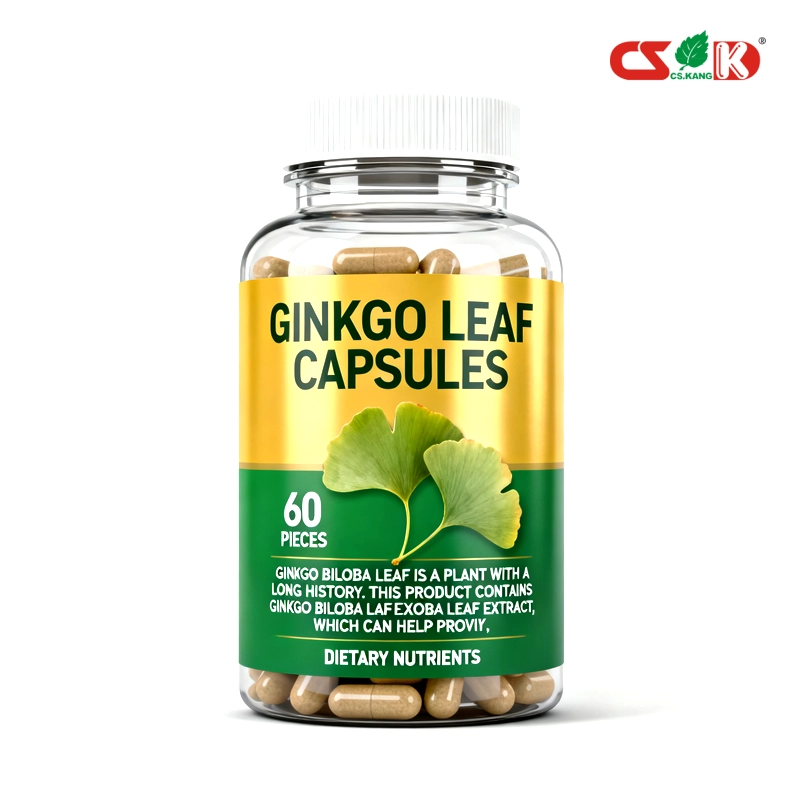
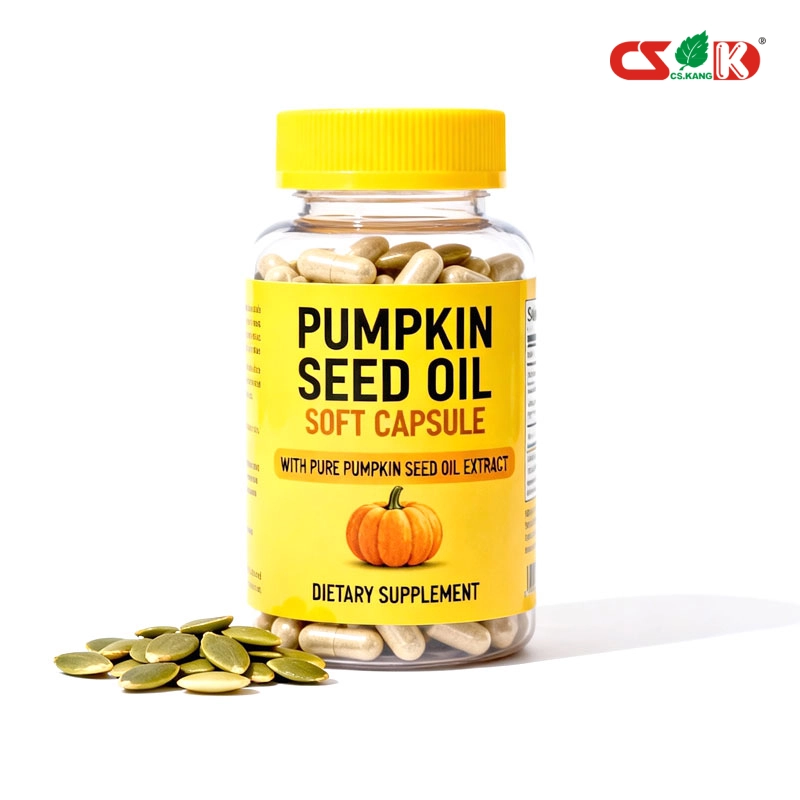
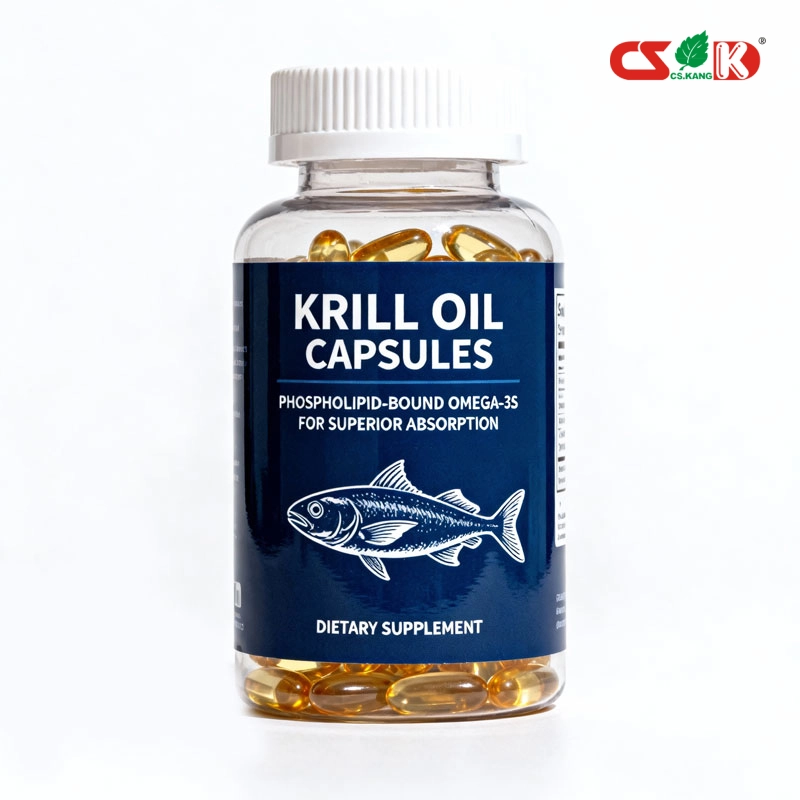
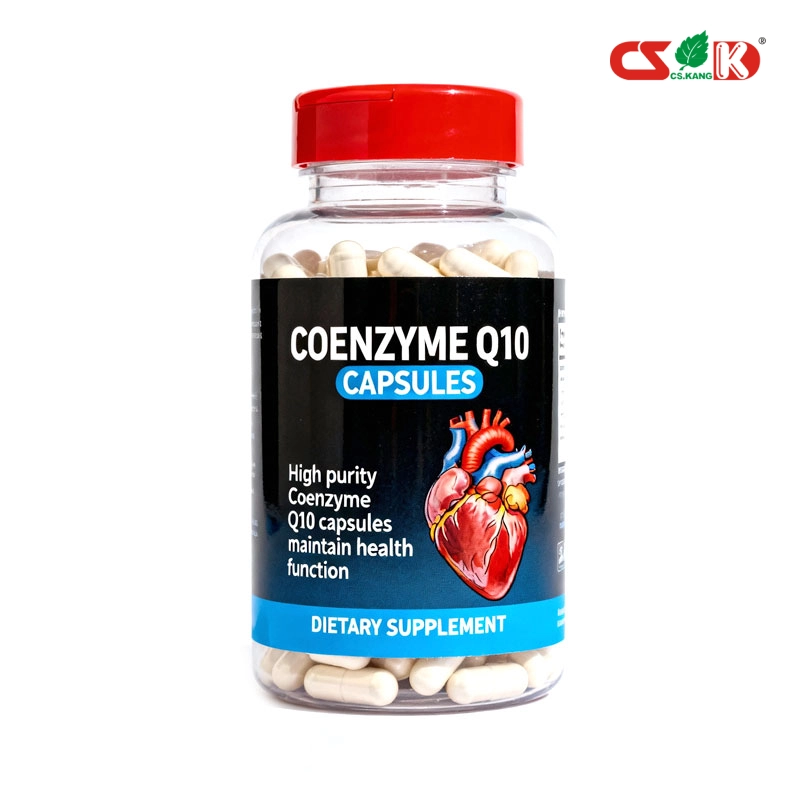
Explore our range of complementary dietary supplement products designed to meet diverse formulation and market needs. Each item is developed and manufactured with the same high-quality standards and expertise that define our dietary supplement contract manufacturing services, helping brands expand their product offerings efficiently and reliably.
Request a Quote for Dietary Supplement Contract Manufacturing
If you need CDMO services for health foods, nutritional supplements, or cosmetics, our team of experts is ready to provide you with customized solutions and quotes.


manufactoryinchina
CSK Biotech Dietary Supplements