
Third-Party Testing and Certification for Supplement Manufacturers

- Why Trust Matters for a Nutritional Supplements Manufacturer
- Third-Party Testing: What Every Nutritional Supplements Manufacturer Needs to Know
- Types of Third-Party Tests Relevant to a Nutritional Supplements Manufacturer
- How a Nutritional Supplements Manufacturer Chooses a Third-Party Lab
- Key Certifications and Programs for a Nutritional Supplements Manufacturer
- Implementing a Third-Party Testing Program as a Nutritional Supplements Manufacturer
- Sample Testing Schedule Example for a Nutritional Supplements Manufacturer
- Managing Supplier Controls and Certificates of Analysis for a Nutritional Supplements Manufacturer
- Practical Supplier Audit Checklist for a Nutritional Supplements Manufacturer
- Cost, Time, and Risk: ROI Considerations for a Nutritional Supplements Manufacturer
- Simple Risk-Based Prioritization Matrix for a Nutritional Supplements Manufacturer
- How Certified CDMOs Support a Nutritional Supplements Manufacturer
- CSK Biotech Advantages for a Nutritional Supplements Manufacturer
- Practical Audit and Documentation Tips for a Nutritional Supplements Manufacturer
- Checklist Before Sharing Products with Retail or Institutional Buyers (for a Nutritional Supplements Manufacturer)
- Final Recommendations: Building a Robust Third-Party Testing Strategy as a Nutritional Supplements Manufacturer
- FAQ — Third-Party Testing and Certification for Supplement Manufacturers
- 1. Why should a Nutritional Supplements Manufacturer use third-party testing?
- 2. Which certifications are most important for a Nutritional Supplements Manufacturer?
- 3. How often should finished products be tested by a Nutritional Supplements Manufacturer?
- 4. Can a Nutritional Supplements Manufacturer rely solely on supplier COAs?
- 5. What are common pitfalls for Nutritional Supplements Manufacturer when engaging third-party labs?
- Contact & Next Steps
- References and Further Reading
Why Trust Matters for a Nutritional Supplements Manufacturer
For any Nutritional Supplements Manufacturer, trust is the currency of growth. Consumers, retailers, and regulators expect products to be safe, accurately labeled, and consistently produced. Third-party testing and independent certification are the most effective ways to demonstrate that trust objectively. This article guides manufacturers through the why, what, and how of third-party testing and certification so they can reduce risk, improve market access, and strengthen brand value.
Third-Party Testing: What Every Nutritional Supplements Manufacturer Needs to Know
Third-party testing refers to analytical and quality checks performed by independent laboratories or certification bodies that are separate from the manufacturer and the ingredient suppliers. For a Nutritional Supplements Manufacturer, third-party testing provides unbiased verification of identity, potency, purity, contaminants, and label claims. It also supports regulatory compliance (e.g., 21 CFR Part 111 in the U.S.) and retail or distribution requirements.
Types of Third-Party Tests Relevant to a Nutritional Supplements Manufacturer
- Identity testing (e.g., LC-MS, HPLC, DNA barcoding for botanicals)
- Potency assays (quantifying active ingredients against label claims)
- Microbiological testing (total aerobic count, yeast/mold, pathogens)
- Contaminant screening (heavy metals, pesticides, mycotoxins, solvents)
- Residual solvents and volatile impurities
- Stability testing and shelf-life studies
- Allergen and undeclared ingredient screening
- Finished product dissolution or disintegration (for tablets/capsules)
How a Nutritional Supplements Manufacturer Chooses a Third-Party Lab
Key selection criteria for a Nutritional Supplements Manufacturer include ISO/IEC 17025 accreditation, experience with dietary supplement matrices, validated methods, chain-of-custody procedures, and transparent reporting. Look for laboratories that can provide raw data, chromatograms, and method validation records when requested.
Key Certifications and Programs for a Nutritional Supplements Manufacturer
Certifications and verification programs demonstrate compliance with recognized quality and safety frameworks. Below is a concise comparison useful for any Nutritional Supplements Manufacturer evaluating credentials.
| Certification / Program | Scope | Who Issues | Why It Matters to a Nutritional Supplements Manufacturer |
|---|---|---|---|
| GMP (21 CFR Part 111) | Manufacturing quality and recordkeeping for dietary supplements | Regulatory (U.S. FDA rules); compliance demonstrated by internal audits | Legal baseline in the U.S.; prevents contamination and mislabeling |
| ISO/IEC 17025 | Laboratory competence and consistent testing results | ISO-accredited national bodies (lab accreditation) | Ensures third-party lab data are reliable and defensible |
| HACCP | Hazard analysis and critical control points in food production | Codex/industry certification bodies | Risk-based preventive approach for ingredient handling and production |
| NSF/NSF/ANSI Certifications | Product-level verification, contaminant screening, GMP audits | NSF International | Retailers often require it; strong consumer-facing trust mark |
| USP Verified | Ingredient and finished-product verification for label accuracy and contaminants | United States Pharmacopeia (USP) | High credibility for potency and purity claims |
| Organic / Non-GMO / Vegan | Ingredient sourcing and process claims | Various accredited certifiers | Supports market differentiation and channel requirements |
Sources: FDA, ISO, NSF, USP (see references).
Implementing a Third-Party Testing Program as a Nutritional Supplements Manufacturer
Design a testing program that aligns with product risk profile, ingredients, processing steps, and market requirements. A practical program for a Nutritional Supplements Manufacturer includes:
- Incoming raw material identity and COA verification
- Periodic batch-level potency and contaminant testing
- Retention sample testing and stability studies for shelf-life
- Environmental and microbiological monitoring of manufacturing areas
- Supplier qualification and periodic re-audits
Sample Testing Schedule Example for a Nutritional Supplements Manufacturer
| Test | Frequency | Who Performs |
|---|---|---|
| Raw material identity | Each new lot | Third-party ISO 17025 lab or in-house validated method |
| Potency (finished product) | Each production batch | Third-party lab or certified CDMO lab |
| Microbiological screen | Every batch for high-risk matrices | Third-party lab |
| Heavy metals / pesticides | Periodic; higher frequency for botanical products | Third-party lab with ICP-MS / GC-MS capability |
| Stability study | Pilot and production scale; ongoing ongoing | Third-party or accredited lab |
Managing Supplier Controls and Certificates of Analysis for a Nutritional Supplements Manufacturer
Supplier management is critical. A Nutritional Supplements Manufacturer should require suppliers to provide Certificates of Analysis (COAs), method validation data, and evidence of good supply-chain practices. Wherever possible, confirm supplier COAs with your own or third-party testing—especially for botanicals, fish oils, probiotics, and allergen-prone ingredients.
Practical Supplier Audit Checklist for a Nutritional Supplements Manufacturer
- Does the supplier have a quality manual and GMP procedures?
- Are analytical methods validated and documented?
- Is traceability demonstrated (batch-to-batch traceability)?
- Are storage and transport conditions controlled and evidenced?
- Are corrective actions tracked and verified after non-conformances?
Cost, Time, and Risk: ROI Considerations for a Nutritional Supplements Manufacturer
Third-party testing adds cost and time, but the ROI often favors testing when factoring in avoided recalls, regulatory fines, brand damage, and lost shelf space. Prioritize testing by risk: higher-cost or higher-risk ingredients (e.g., botanicals, fish oil, probiotics) should get more frequent third-party verification than low-risk excipients.
Simple Risk-Based Prioritization Matrix for a Nutritional Supplements Manufacturer
| Ingredient/Product Risk | Recommended Testing Intensity |
|---|---|
| High (botanicals, probiotics, fish oil) | Test identity, potency, heavy metals, pesticides, microbial per batch |
| Medium (active isolates, fortified vitamins) | Test potency and contaminants per batch or periodic verification |
| Low (inorganic excipients) | Periodic verification and supplier COA review |
How Certified CDMOs Support a Nutritional Supplements Manufacturer
Partnering with an experienced Contract Development and Manufacturing Organization (CDMO) can reduce compliance burden and speed time-to-market. A reputable CDMO offers validated analytical labs, GMP-compliant production, regulatory support, and established supplier networks—allowing a Nutritional Supplements Manufacturer to scale while maintaining quality.
Founded in 2008, CSK Biotech is a leading high-tech enterprise dedicated to the R&D and manufacturing of dietary supplements, health foods, and cosmetics. With a GMP-certified 2,000㎡ factory, seven advanced production lines, and an annual capacity exceeding 4.5 billion softgels and 1.5 billion tablets, we deliver high-quality, large-scale manufacturing solutions for global brands. Our core manufacturing services include contract manufacturing of capsules, tablets, powders, gummies, and liquids, and we also provide professional R&D, formulation development, and free packaging services.As a professional Contract Development and Manufacturing Organization (CDMO), CSK Biotech provides end-to-end solutions that cover the entire product lifecycle—from concept development, formulation research, pilot testing, and stability verification to production, regulatory registration, and marketing support. We offer three cooperation models: ODM for market-oriented product innovation, CDM for tailor-made product design, and OEM for precise, formula-based production to ensure accuracy and timely delivery.Certified by GMPC, FDA, HACCP, and ISO, CSK Biotech adheres to the highest international standards of quality and safety. With strong innovation capabilities, advanced technology, and a customer-focused approach, we are committed to helping global partners create effective, safe, and competitive health products that meet the growing demands of consumers worldwide.
CSK Biotech Advantages for a Nutritional Supplements Manufacturer
- Large-scale capacity for tablets and softgels to support commercial launches
- On-site R&D and pilot testing reduce iteration time and testing duplication
- Multi-format manufacturing (tablet, softgel, capsule, powder, liquid, gummy) simplifies supplier management
- Certified processes (GMPC, FDA-aligned practices, HACCP, ISO) support retailer and international market entry
- Flexible cooperation models (ODM/CDM/OEM) suit brands at different stages
Practical Audit and Documentation Tips for a Nutritional Supplements Manufacturer
Be audit-ready: keep test reports, COAs, method validations, stability data, batch records, and corrective action reports organized and retained per regulatory timelines. Use electronic quality management systems (eQMS) where possible to control versions and expedite responses to customer or regulator inquiries.
Checklist Before Sharing Products with Retail or Institutional Buyers (for a Nutritional Supplements Manufacturer)
- Complete third-party potency and contaminant reports for representative batches
- GMP documentation and recent internal audit reports
- Stability summary and recommended shelf-life
- Label review and substantiation for claims
- Traceability records for high-risk ingredients
Final Recommendations: Building a Robust Third-Party Testing Strategy as a Nutritional Supplements Manufacturer
Start with a risk-based approach, validate your suppliers, choose accredited laboratories, and align your testing strategy with market and retailer requirements. Where possible, partner with a certified CDMO that can provide integrated testing and manufacturing services to reduce complexity and cost. Maintain transparent records and treat third-party testing as an investment in brand protection rather than an expense.
FAQ — Third-Party Testing and Certification for Supplement Manufacturers
1. Why should a Nutritional Supplements Manufacturer use third-party testing?
Third-party testing provides unbiased, accredited confirmation of identity, potency, and safety. It reduces legal and reputational risk and helps meet retailer and regulatory requirements.
2. Which certifications are most important for a Nutritional Supplements Manufacturer?
Key frameworks include GMP compliance (21 CFR Part 111 in the U.S.), ISO/IEC 17025 accreditation for labs, and product-level verifications such as NSF or USP depending on market demands.
3. How often should finished products be tested by a Nutritional Supplements Manufacturer?
Frequency depends on risk: high-risk products (botanicals, probiotics) are best tested per batch; medium-risk products may be tested per batch or periodically; low-risk products can rely more on supplier COAs and periodic verification.
4. Can a Nutritional Supplements Manufacturer rely solely on supplier COAs?
No. COAs are a necessary part of supplier control but should be verified with independent testing, especially for high-risk ingredients or new suppliers.
5. What are common pitfalls for Nutritional Supplements Manufacturer when engaging third-party labs?
Pitfalls include using non-accredited labs, accepting non-validated methods, insufficient chain-of-custody, and failing to request raw data or method validation documents.
Contact & Next Steps
Need help designing a testing program or finding a certified CDMO partner? Contact CSK Biotech to discuss formulation, third-party testing integration, and large-scale manufacturing for tablet supplements manufacture, supplement manufacturing softgels, capsule supplement manufacturing, liquid supplement contract manufacturing, powder supplement manufacturing, and gummy supplement manufacture. Visit our website or email our business development team to request capability statements, certifications, and sample test reports.
References and Further Reading
- U.S. Food & Drug Administration (FDA) — Dietary Supplements: https://www.fda.gov/food/dietary-supplements (accessed 2024-06-01)
- Code of Federal Regulations — 21 CFR Part 111 (Current Good Manufacturing Practice): https://www.ecfr.gov/current/title-21/chapter-I/subchapter-B/part-111 (accessed 2024-06-01)
- ISO/IEC 17025 — General requirements for the competence of testing and calibration laboratories: https://www.iso.org/standard/66912. (accessed 2024-06-01)
- NSF International — Dietary Supplements Program: https://www.nsf.org/consumer-resources/health-and-wellness/dietary-supplements (accessed 2024-06-01)
- United States Pharmacopeia (USP) — Dietary Supplement Verification Program: https://www.usp.org/verification-services/dietary-supplements (accessed 2024-06-01)
- FDA — HACCP Principles & Application Guidelines: https://www.fda.gov/food/hazard-analysis-critical-control-point-haccp (accessed 2024-06-01)
- International Council for Harmonisation (ICH) — Quality Guidelines (analytical method validation): https://www.ich.org/page/quality-guidelines (accessed 2024-06-01)
- ConsumerLab — Independent testing and review of supplements (membership resource): https://www.consumerlab.com/ (accessed 2024-06-01)
- World Health Organization (WHO) — Good Manufacturing Practices for pharmaceutical products and related guidance: https://www.who.int/teams/regulation-prequalification/regulation-and-safety/quality-assurance/good-manufacturing-practices (accessed 2024-06-01)
Unlocking Success in Chewable Tablet Manufacturing: A CDMO's Expert Guide
Top 10 Nutritional Supplements Manufacturers and Supplier Brands
Custom OEM supplement manufacturers Manufacturers and Suppliers
Custom best white label supplement company Manufacturers and Suppliers
文章
Why choose CSK Biotech as your manufacturing partner?
Clients choose CSK Biotech because we offer:
-
· Comprehensive dosage form capabilities
-
· Strong customization and R&D support
-
· GMP-compliant manufacturing
-
· Reliable quality and stable supply
-
· One-stop OEM/ODM solutions
Do you provide packaging services?
Yes. We offer a variety of packaging solutions, including:
-
· Bottles and jars
-
· Sachets and sticks
-
· Bulk packaging
-
· Customized labeling options
Packaging can be tailored to your brand and target market needs.
Are your manufacturing facilities GMP certified?
Yes. CSK Biotech operates under GMP (Good Manufacturing Practices) standards. Our production facilities follow strict quality · · · management systems to ensure:
-
· Product safety
-
· Batch consistency
-
· Full traceability of raw materials and finished products
Can CSK Biotech assist with labeling and documentation?
Yes. We provide support for:
-
· Product labeling requirements
-
· Ingredient lists and specifications
-
· Basic regulatory documentation
This helps ensure smoother market entry and compliance with customer requirements.
What ingredients can be used in your products?
We support a wide range of ingredients, such as:
-
· Vitamins and minerals
-
· Herbal extracts
-
· Amino acids
-
· Probiotics and prebiotics
-
· Functional ingredients for immunity, beauty, sleep, energy, and metabolism
All raw materials are carefully selected and quality-tested before use.
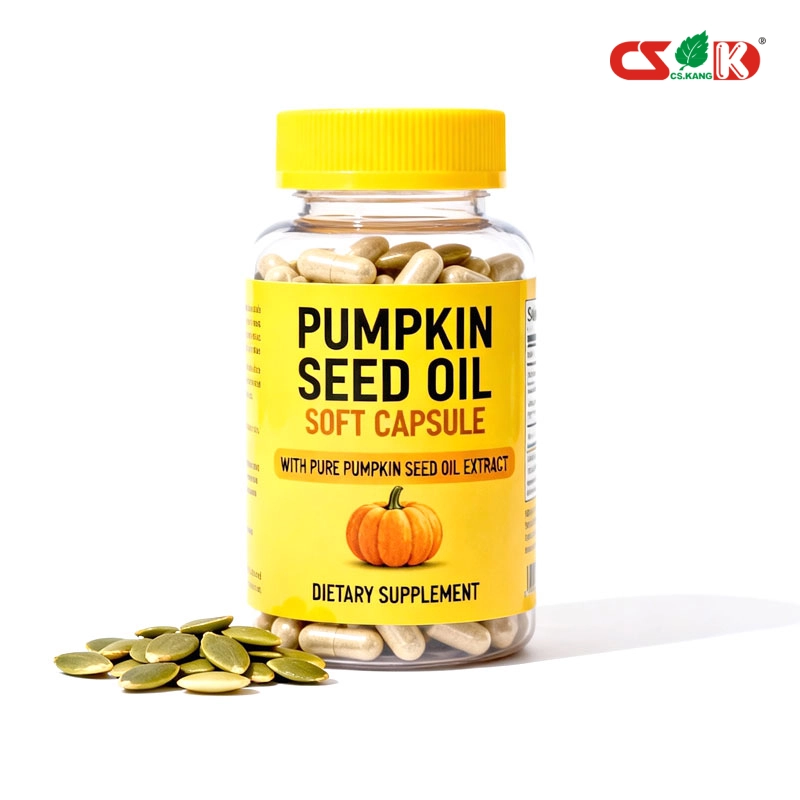
Cold-Pressed Pumpkin Seed Oil Capsules: Rich in Zinc, Phytosterols & Fatty Acids
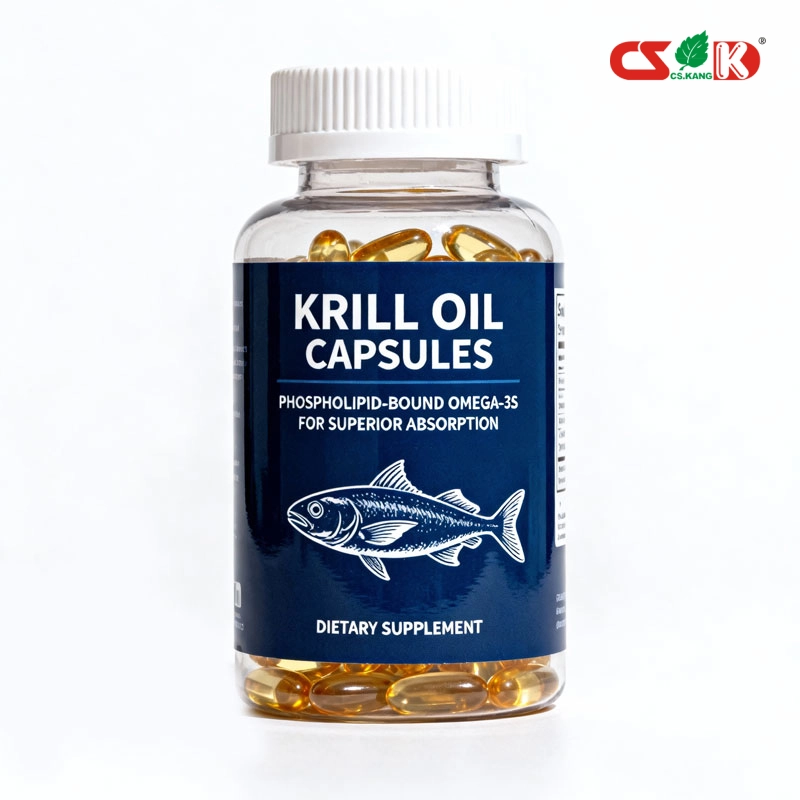
Supports Heart & Brain Health: Krill Oil Rich in EPA & DHA
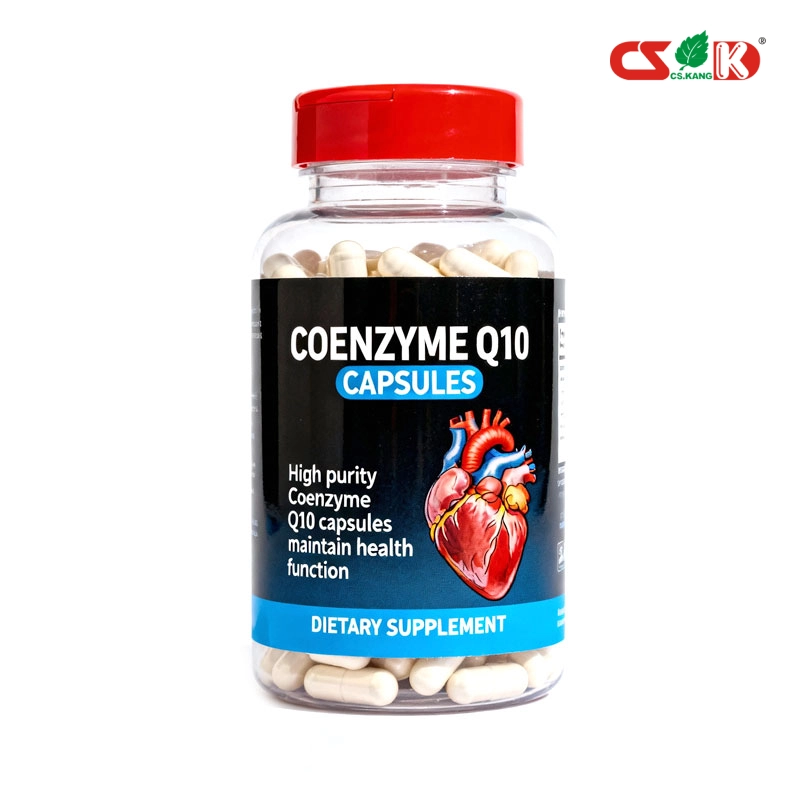
High purity Coenzyme Q10 capsules maintain heart health function

manufactoryinchina
CSK Biotech Dietary Supplements