
Custom supplement label compliance services Manufacturers and Suppliers

- Why regulatory label compliance matters for supplement brands
- Public safety and legal exposure
- Market access and brand reputation
- Global compliance complexity
- Core elements of supplement label compliance services
- Regulatory review and label auditing
- Claims review and substantiation
- Ingredient, allergen, and contamination controls
- Operational workflow: how CSK Biotech delivers compliance-ready labels
- Initial intake and label concepting
- Regulatory drafting, translations, and localization
- Pre-market checks, documentation, and registration support
- Common label pitfalls and practical solutions
- Misstated ingredient amounts and units
- Unapproved health claims and implied disease treatment
- Allergen labeling and cross-contamination statements
- Technical and quality controls to support label compliance
- GMP, testing, and master batch records
- Third-party verification and certification
- Stability data and shelf-life labeling
- How to choose a professional supplement label compliance partner
- Domain expertise and integrated services
- Documentation and audit readiness
- Global regulatory reach and localization
- Case example: From concept to compliant shelf label (workflow summary)
- Frequently Asked Questions (FAQ)
- Q: What is the most common labeling error for supplements?
- Q: Do I need different labels for each country?
- Q: How does CSK handle claim substantiation?
- Conclusion
For manufacturers and suppliers selling dietary supplements across multiple markets, accurate and compliant labeling is essential for regulatory approval, consumer trust, and avoiding costly recalls. This guide explains how supplement label compliance services help you meet FDA requirements, CGMP rules, substantiation for claims, ingredient and allergen declarations, multilingual labeling for global markets, and practical steps for audits and documentation—so your product launches are smooth and defensible.
Why regulatory label compliance matters for supplement brands
Label compliance is not just a legal box to check. Correct labeling protects public health, supports truthful marketing, and reduces risk of enforcement actions, recalls, or market access delays. The U.S. Food and Drug Administration (FDA) enforces dietary supplement labeling and Current Good Manufacturing Practice (CGMP) requirements; failure to comply can lead to warning letters, product seizures, or mandatory corrections. For authoritative guidance, see the FDA's dietary supplements pages (https://www.fda.gov/food/dietary-supplements) and the CGMP requirements for dietary supplements (https://www.fda.gov/food/dietary-supplements/current-good-manufacturing-practices-cgmps).
Public safety and legal exposure
Labels communicate dose, active ingredients, usage instructions, warnings, and allergen information. Incorrect or missing details can lead to adverse events and regulatory action. For example, inadequate warning statements for certain botanical extracts or stimulant-containing supplements have prompted recalls and agency scrutiny.
Market access and brand reputation
Retailers and marketplaces (e.g., Amazon, major chains) demand strict label accuracy and substantiated claims. Non-compliant products risk delisting, consumer complaints, and long-term brand damage. Supplement label compliance services help avoid these pitfalls via pre-release review, claims substantiation, and master label control.
Global compliance complexity
Exporting adds complexity: the EU, Canada, Australia, and other jurisdictions have specific labeling and claim rules. A harmonized compliance strategy includes multilingual labels, region-specific nutrient declarations, and documented evidence for permitted health claims.
Core elements of supplement label compliance services
Regulatory review and label auditing
A professional compliance service performs a line-by-line audit of your proposed Supplement Facts panel, ingredient list, disclaimers, directions, net quantity, manufacturer contact, lot/batch labeling, and any structure/function claims. Audits verify that formats, units, and nutrient declarations meet local rules and that mandatory statements (e.g., “This statement has not been evaluated by the Food and Drug Administration…”) are present when needed.
Claims review and substantiation
Claims fall into categories: structure/function claims, nutrient content claims, and disease claims (the latter prohibited for supplements). Compliance specialists evaluate supportive evidence—clinical studies, traditional use, or authoritative references—and prepare claim substantiation files. For U.S. labeling, adherence to DSHEA principles and FDA guidance is essential; see NIH Office of Dietary Supplements for authoritative ingredient and safety data (https://ods.od.nih.gov/).
Ingredient, allergen, and contamination controls
Services confirm that all ingredients are declared correctly (botanical Latin names, standardized extracts, forms such as “magnesium citrate”), identify allergen presence per local requirements, and verify absence of prohibited substances. They also coordinate with quality teams to ensure traceability, COAs, and third-party testing such as heavy metals, microbial limits, and identity testing (e.g., USP methods). The United States Pharmacopeia offers authoritative standards for ingredient quality (https://www.usp.org/dietary-supplements).
Operational workflow: how CSK Biotech delivers compliance-ready labels
Initial intake and label concepting
We start by capturing product intent: target market(s), desired claims, dosage forms (softgels, tablets, powders, gummies, liquids), and packaging formats. For international launches we map regulatory differences at the outset. CSK’s CDMO model integrates these constraints early in formulation and packaging choices to avoid late-stage relabeling.
Regulatory drafting, translations, and localization
CSK prepares label drafts aligned to regional rules and provides expert translations and localization to maintain legal meaning in each language — critical for markets where literal translations can create misleading claims. We also support barcode/GTIN printing and country-specific marking requirements.
Pre-market checks, documentation, and registration support
Before production, CSK runs checklists including COA verification, GMP audit readiness, and label mock review. For markets requiring registration or notifications, CSK compiles dossiers and supports filing. We maintain controlled master label files and change-control logs to ensure traceability across product lifecycles.
Common label pitfalls and practical solutions
Misstated ingredient amounts and units
Issue: Declaring ingredient amounts in inconsistent units (e.g., “mg” vs “IU”) or failing to list active constituent standardization for botanicals. Solution: Use standard units required by the market and include standardization details when applicable. Compliance services verify unit consistency and prepare the precise Supplement Facts panel.
Unapproved health claims and implied disease treatment
Issue: Marketing language that implies disease treatment (e.g., treats arthritis) will be treated as a drug claim. Solution: Reframe messaging to permitted structure/function statements and prepare substantiation files. Compliance reviewers cross-check marketing copy across label, website, and ads to ensure consistency.
Allergen labeling and cross-contamination statements
Issue: Missing or unclear allergen warnings; incomplete cross-contact statements for manufacturing lines. Solution: Implement documented allergen control programs and ensure labels clearly state the presence of priority allergens and cross-contact risks per local rules.
| Common Issue | Potential Consequence | CSK Compliance Solution |
|---|---|---|
| Missing prescribed disclaimer | FDA warning letter, delisting | Label audit ensures mandatory disclaimers are present |
| Non-standard ingredient naming | Import/export delays, consumer confusion | Standard nomenclature, Latin binomial and extract specs |
| Unsupported health claims | Legal enforcement, reputational harm | Claims substantiation and alternative compliant language |
Technical and quality controls to support label compliance
GMP, testing, and master batch records
Compliance relies on demonstrable quality systems. The FDA’s CGMP rule for dietary supplements (21 CFR Part 111) requires identity testing, in-process controls, and master batch records. Robust QA/QC, validated methods, and retained samples are standard practices for defensible labeling claims. CSK’s GMP-certified facility and seven production lines let us integrate testing and batch documentation directly into the manufacturing workflow; learn more about CGMP requirements on the FDA site (https://www.fda.gov/food/dietary-supplements/current-good-manufacturing-practices-cgmps).
Third-party verification and certification
Third-party testing and certification (e.g., USP verification, NSF, Informed-Sport) provide market differentiation and retailer confidence. CSK facilitates third-party sampling plans and coordinates lab testing to ensure label claims are supported by analytical evidence. For broader quality frameworks, ISO 22000 / food safety standards are often integrated into supplier assessments (https://www.iso.org/iso-22000-food-safety-management.).
Stability data and shelf-life labeling
Recommended shelf-life and storage conditions must be supported by stability studies. CSK conducts pilot stability testing and provides guidance on expiration dating, storage statements, and consumer instructions based on real data, reducing the risk of label misstatements post-launch.
How to choose a professional supplement label compliance partner
Domain expertise and integrated services
Choose a partner that combines regulatory knowledge with manufacturing capability. A CDMO like CSK Biotech offers formulation R&D, pilot runs, and in-house packaging services, enabling synchronized label development and faster time-to-market. CSK’s 2,000㎡ GMP-certified factory and annual capacity (over 4.5 billion softgels and 1.5 billion tablets) allow for large-scale production with strict quality control.
Documentation and audit readiness
Key selection criteria include documented label control processes, change-control logs, and experience supporting regulatory filings. Ensure the partner can provide master label files, COAs, stability reports, and audit trails on request.
Global regulatory reach and localization
If you target multiple regions, confirm the partner’s experience with each jurisdiction’s labeling rules. CSK’s CDMO models (ODM, CDM, OEM) include regulatory registration and marketing support to address market-specific requirements and translations.
Case example: From concept to compliant shelf label (workflow summary)
Below is a simplified timeline for a new softgel supplement using CSK’s services:
| Phase | Activities | Deliverables |
|---|---|---|
| Concept & R&D | Formulation, initial label copy, claims mapping | Draft label, formulation specs |
| Pilot & Testing | Stability, COA generation, identity testing | Stability report, COAs |
| Pre-launch Compliance | Label audit, claims substantiation, translations | Final master label, supporting dossier |
| Production & Release | GMP manufacturing, batch records, QC release | Released batches with traceable documentation |
Frequently Asked Questions (FAQ)
Q: What is the most common labeling error for supplements?
A: One frequent error is using non-standard or incomplete ingredient names—especially for botanicals and proprietary blends—leading to ambiguous consumer information and regulatory scrutiny. Ensuring Latin binomial names, extract ratios, and standardized constituents are clearly declared mitigates this risk.
Q: Do I need different labels for each country?
A: Often yes. While the Supplement Facts format may be accepted across markets, units, permitted claims, and mandatory statements differ. Compliance services build localized label variants and manage translations and country-specific requirements to ensure lawful marketing.
Q: How does CSK handle claim substantiation?
A: CSK compiles scientific dossiers, referencing human clinical trials, authoritative monographs, and traditional use data where appropriate. We then advise on permitted structure/function phrasing or suggest alternative compliant marketing language. For scientific references, we use recognized resources such as NIH’s Office of Dietary Supplements (https://ods.od.nih.gov/).
Conclusion
Label compliance is a multidisciplinary task requiring regulatory expertise, quality systems, and aligned manufacturing. Professional supplement label compliance services minimize legal risk, safeguard consumers, and streamline product launches across multiple markets. CSK Biotech couples CDMO manufacturing scale and GMP-certified production with regulatory, formulation, and labeling expertise—delivering compliant, market-ready supplements at scale. For regulatory frameworks and standards, consult FDA dietary supplement resources (https://www.fda.gov/food/dietary-supplements), FDA CGMP guidance (https://www.fda.gov/food/dietary-supplements/current-good-manufacturing-practices-cgmps), USP standards (https://www.usp.org/dietary-supplements), ISO food safety guidance (https://www.iso.org/iso-22000-food-safety-management.), and NIH ODS (https://ods.od.nih.gov/).
Contact CSK Biotech to discuss custom supplement label compliance services tailored to CSK Biotech, regulatory strategy, and markets. Email: steve@cskbiotech.com.
Custom contract manufacturing for gummy supplements Manufacturers and Suppliers
Custom best sports supplement manufacturer Manufacturers and Suppliers
Custom white label dietary supplements manufacturer Manufacturers and Suppliers
Contract Manufacturing vs In-House Production: Cost Analysis
文章
Are your manufacturing facilities GMP certified?
Yes. CSK Biotech operates under GMP (Good Manufacturing Practices) standards. Our production facilities follow strict quality · · · management systems to ensure:
-
· Product safety
-
· Batch consistency
-
· Full traceability of raw materials and finished products
What quality control measures do you have?
Our quality control system includes:
-
· Raw material inspection and verification
-
· In-process quality monitoring
-
· Finished product testing
-
· Batch record management and traceability
Quality and compliance are integrated into every stage of our manufacturing process.
Can CSK Biotech assist with labeling and documentation?
Yes. We provide support for:
-
· Product labeling requirements
-
· Ingredient lists and specifications
-
· Basic regulatory documentation
This helps ensure smoother market entry and compliance with customer requirements.
Who is CSK Biotech?
CSK Biotech is a professional biotechnology company specializing in OEM/ODM contract manufacturing of dietary supplements. We provide customized production services for softgel capsules, hard capsules, tablets, powders, gummies, and liquid supplements, supporting global brands from formulation to finished products.
Why choose CSK Biotech as your manufacturing partner?
Clients choose CSK Biotech because we offer:
-
· Comprehensive dosage form capabilities
-
· Strong customization and R&D support
-
· GMP-compliant manufacturing
-
· Reliable quality and stable supply
-
· One-stop OEM/ODM solutions
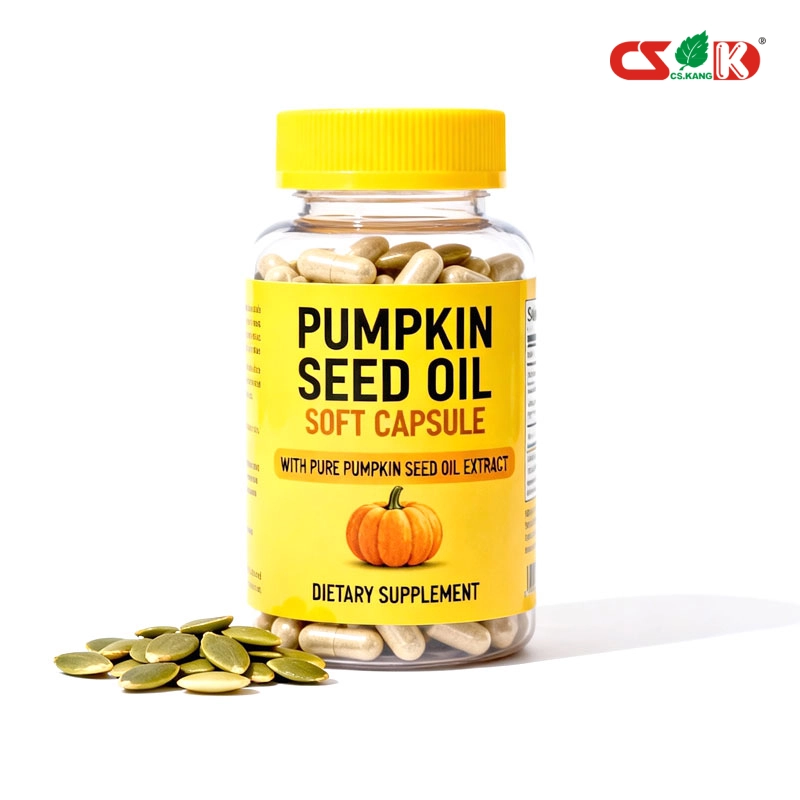
Cold-Pressed Pumpkin Seed Oil Capsules: Rich in Zinc, Phytosterols & Fatty Acids
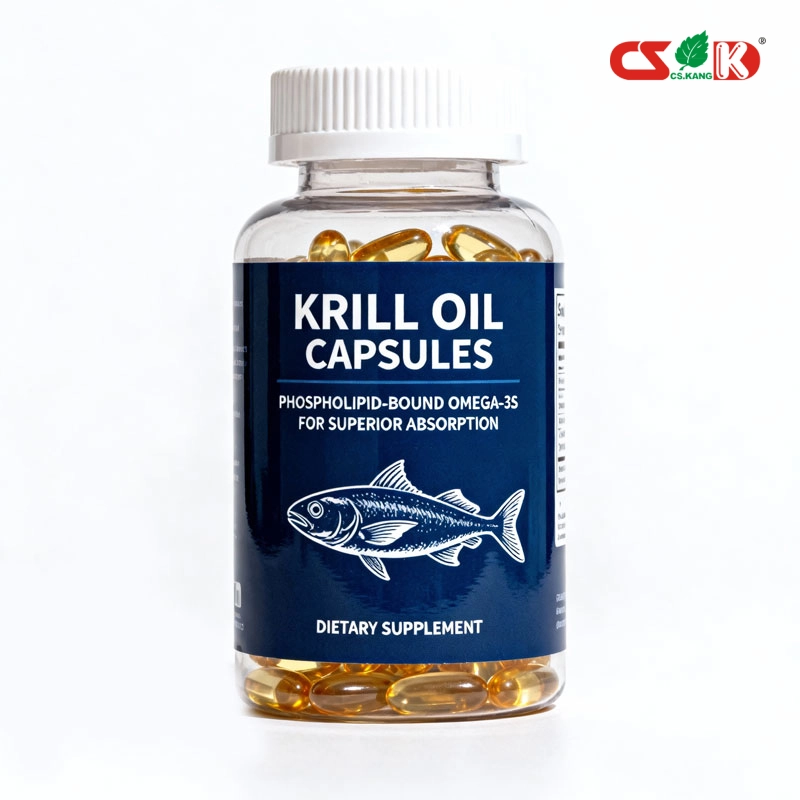
Supports Heart & Brain Health: Krill Oil Rich in EPA & DHA
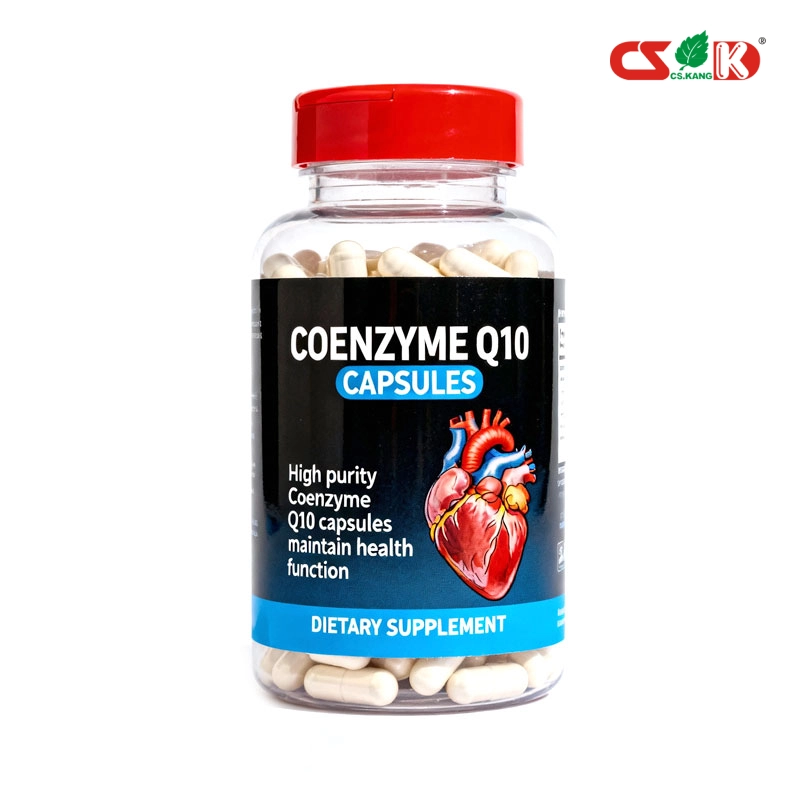
High purity Coenzyme Q10 capsules maintain heart health function

manufactoryinchina
CSK Biotech Dietary Supplements