

Custom mineral supplements Manufacturers and Suppliers

- Why Bespoke Formulation Requires More Than a Standard Product
- Match the formulation to the product brief
- Choose a dosage form that can be manufactured consistently
- Set measurable requirements before requesting a quote
- How to Vet a Manufacturer from Concept Through Production
- Evaluate prototypes and scale-up as separate gates
- Inspect quality systems and documentation
- Protect formula ownership and agree on change control
- Regional Logistics, Risk Management, and Launch Readiness
- Assess the complete route to the destination market
- Plan materials, packaging, and continuity
- Use a practical supplier scorecard
- Frequently Asked Questions
Custom mineral supplements manufacturers and suppliers help brands, distributors, and healthcare businesses develop mineral formulations around defined product, market, and operational requirements. A sound sourcing process evaluates formulation expertise, ingredient traceability, pilot-batch performance, quality controls, packaging capability, intellectual-property terms, and delivery plans—not price alone. Because the target manufacturing region and destination markets have not been specified, buyers should verify local licensing, import rules, tariffs, and applicable product standards directly with qualified advisers and regulators before placing an order.
Why Bespoke Formulation Requires More Than a Standard Product
Match the formulation to the product brief
A custom mineral supplement project begins with a clear product brief. Buyers should specify the intended consumer or professional channel, dosage form, serving size, target markets, preferred minerals, desired elemental amounts, dietary or allergen constraints, and packaging format. The brief should also state what the product is not intended to do. This helps the manufacturer assess feasibility without drifting into unsubstantiated health claims or assumptions about a product’s regulatory classification.
Mineral ingredients differ in chemical form, elemental concentration, solubility, sensory properties, and handling needs. A form that works well in a tablet may not be suitable for a clear liquid or a flavored powder. Likewise, adding several minerals can create challenges involving taste, interactions, moisture sensitivity, tablet size, and manufacturing flow. Ask the formulation team to explain the rationale for ingredient choices and identify trade-offs in a written development record. Do not assume that a higher declared amount, a particular compound, or a “natural” label automatically means a better or more appropriate product.
Choose a dosage form that can be manufactured consistently
Tablets, capsules, powders, liquids, and gummies create different engineering demands. Tablets may need formulation work to achieve suitable hardness, disintegration, and production performance. Capsules require attention to fill weight, powder flow, and shell compatibility. Powders can be affected by segregation, caking, flavor interactions, and moisture exposure. Liquids require appropriate stability and preservation strategies, while gummies can constrain mineral loading because taste, texture, and processing conditions must remain acceptable.
Ask prospective mineral supplements partners to assess the formulation against the intended process, equipment, and package—not merely to provide a recipe. A technically attractive bench formula may need revision before it can run reliably on commercial equipment. A qualified manufacturer should describe relevant capabilities, identify information needed from the buyer, and flag uncertainties early. If a requested combination, serving size, or format is not feasible, ask for alternatives and supporting reasoning rather than accepting an unsupported assurance.
Set measurable requirements before requesting a quote
Quotes are useful only when suppliers are pricing comparable scopes. Provide the target formula or development brief, target batch size, dosage form, packaging specifications, labeling responsibilities, testing expectations, target launch date, and forecast assumptions. Identify which party supplies each ingredient and packaging component. Clarify whether the quotation covers formulation, pilot work, analytical testing, stability work, artwork review, production, and release documentation.
For early-stage projects, separate one-time development charges from recurring unit costs. Ask about minimum order quantities, scale-up assumptions, component lead times, and the conditions that may change the price. A transparent supplier should distinguish confirmed costs from estimates dependent on final specifications or testing results. This makes it easier to compare mineral supplements proposals on total project cost and risk, not just the price per bottle.
| Decision area | Standard off-the-shelf product | Custom mineral supplement project | Buyer verification |
|---|---|---|---|
| Formula | Existing composition selected from a supplier’s range | Developed or adjusted to a project brief | Ingredient forms, quantities, and change-control rules |
| Development | Usually limited to selection and branding | May include feasibility review, prototypes, and scale-up | Milestones, fees, sample ownership, and approval criteria |
| Production | May offer shorter setup when inventory is available | Depends on component sourcing, validation, and batch size | Capacity, minimums, lead times, and production slot terms |
| Quality evidence | Review available standard product documentation | Agree on project-specific specifications and release records | Testing scope, acceptance limits, certificates, and deviations |
| Market fit | Existing label or formula may need adaptation | Can be planned around stated market requirements | Who checks local rules, claims, labels, and import documents |
How to Vet a Manufacturer from Concept Through Production
Evaluate prototypes and scale-up as separate gates
Prototyping should test whether a proposed mineral supplement meets agreed product and process requirements. Establish what a prototype is intended to demonstrate: appearance, taste, fill weight, tablet performance, package fit, preliminary analytical results, or another defined attribute. Request a written sample record identifying the formula version, batch date, raw-material lots where applicable, and any known differences from the intended commercial process.
A prototype is not proof that a commercial batch will perform identically. Before approving production, discuss scale-up risks, process controls, expected yield, in-process checks, and the evidence required to release a batch. For projects involving stability-sensitive ingredients or packaging, agree on whether a stability program is required, its conditions, test intervals, and responsibility for interpreting results. These plans should be appropriate to the product and the markets in which it will be sold.
Inspect quality systems and documentation
Ask the supplier to describe its quality management system and the standards or regulatory requirements it follows for the relevant product category and manufacturing location. Verify the scope, issuing body, site, and expiry or current status of any certificates presented. Certification can support supplier assessment, but it does not by itself establish that a particular formula, label, batch, or marketing claim complies with every destination market’s requirements.
For U.S.-market dietary supplements, review the applicable requirements in the FDA dietary supplement current good manufacturing practice regulations. For product and quality-system evaluation, buyers can also examine the scope of NSF/ANSI 173 for dietary supplements and the management-system framework described by ISO 22000 food safety management systems. These references are useful starting points, not substitutes for jurisdiction-specific regulatory advice or a facility audit.
Request relevant documentation, which may include approved specifications, certificates of analysis, incoming-material controls, batch records, deviation and corrective-action processes, complaint handling, and product traceability information. Confirm how the supplier manages out-of-specification results, rework, rejected lots, and changes to ingredients or processes. For mineral supplements, buyers should understand which identity, strength, purity, and contaminant tests are planned, who performs them, and whether methods and acceptance criteria are documented.
Protect formula ownership and agree on change control
Before sharing a detailed formula, negotiate confidentiality and ownership terms. The agreement should distinguish buyer-provided information, supplier background know-how, jointly developed work, and any rights to use a formula after the relationship ends. Define whether the manufacturer may substitute ingredients, suppliers, or processing aids, and require written approval for changes that affect agreed specifications or product characteristics.
Also document responsibilities for label review, claims substantiation, artwork approval, regulatory notifications where applicable, and retention of records. Buyers should not assume that a manufacturer’s willingness to produce a product means that the product is approved for every market or that its claims are lawful. Clear contracts assign duties, define approval checkpoints, set procedures for handling confidential files, and provide a route for resolving quality or delivery disputes.
Regional Logistics, Risk Management, and Launch Readiness
Assess the complete route to the destination market
Since no target region was provided, regional advantages cannot be stated reliably for this project. Instead, compare candidate manufacturing locations against the actual destination, transport mode, shipment size, customs process, and delivery deadline. A nearby supplier may reduce transit distance but may not offer the required formulation capability or available capacity. A distant supplier may be suitable if documentation, freight planning, and lead-time buffers are well managed.
Ask the supplier which party arranges export documentation, freight, insurance, customs brokerage, and delivery to the named destination. Confirm the agreed shipping terms and the precise point at which risk and cost transfer. Before ordering, check the applicable tariff classification, duties, taxes, import permits, labeling rules, and any restrictions for the finished product or its ingredients with the relevant authorities or a qualified customs professional. These obligations depend on the origin, product composition, and destination and should not be inferred from another buyer’s experience.
Plan materials, packaging, and continuity
Supply risk may come from mineral raw materials, excipients, capsules, bottles, closures, labels, or cartons. Request realistic lead times for critical components and learn whether the supplier relies on a single source. Where substitutions may be considered, define the approval process and required evidence before the first order. For branded mineral supplements, packaging artwork and printed components can become launch constraints even when the formula is ready.
Build a production schedule that includes specification approval, component procurement, prototype review, testing, manufacturing, release, and transit. Agree on how schedule changes will be communicated and what happens if a component is delayed or a test result fails. Depending on product characteristics and logistics, discuss suitable packaging protections and storage or transport conditions with the manufacturer. Maintain reasonable inventory assumptions and avoid treating an estimated production date as a guaranteed delivery date unless the contract says so.
Use a practical supplier scorecard
Compare suppliers against documented evidence rather than presentation quality. A scorecard can cover technical fit, relevant product experience, quality-system maturity, testing access, capacity, communication, commercial transparency, and logistics support. Weight the criteria according to project risk: for a novel dosage form, formulation and scale-up evidence may matter most; for a time-sensitive launch, component availability and production scheduling may deserve greater emphasis.
Before awarding a contract, request references or examples that are relevant to the product type, subject to confidentiality. Consider a remote or onsite assessment appropriate to the risk and scope. Record open questions, assigned owners, and due dates, then make award approval conditional on closing critical gaps. This structured approach helps buyers distinguish capable mineral supplements manufacturers from suppliers that can only offer a standard catalog item.
For each candidate, record the manufacturing site, product scope, applicable quality credentials, development milestones, testing responsibilities, minimum order quantity, lead-time assumptions, and contract status. Revisit the scorecard when the formula, package, market, or forecast changes. A supplier that was suitable for a pilot may not automatically be the right choice for scaled production, and a regional logistics advantage should be confirmed against actual lane and customs requirements.
For a project-specific evaluation, contact us with your target formulation, dosage form, intended markets, volume expectations, packaging needs, and required launch timing so we can discuss a custom mineral supplement manufacturing plan.
Frequently Asked Questions
What information should I provide when requesting a custom mineral supplement quote?
Provide the product brief or target formula, intended consumers and markets, dosage form, serving size, preferred minerals, packaging specifications, target batch size, testing expectations, labeling responsibilities, forecast assumptions, and launch timing. Ask the supplier to separate development costs from recurring production costs.
How can I tell whether a manufacturer can scale a prototype to commercial production?
Ask how the prototype differs from the intended commercial process, what scale-up risks have been identified, and which process controls, in-process checks, yield assumptions, and release criteria will apply. Agree on evidence and approval gates before authorizing a production run.
Which quality documents should I request from a mineral supplement supplier?
Depending on the project, request relevant quality-system documentation, approved specifications, certificates of analysis, material and batch traceability records, testing plans, deviation and corrective-action procedures, complaint handling information, and change-control requirements. Verify the scope and current status of any certificates.
Who is responsible for regulatory compliance and label approval?
Define responsibilities in the contract. Buyers should not assume that the manufacturer’s willingness to produce a product confirms that its formula, label, claims, or import status complies in every destination market. Agree who reviews specifications, labeling, claims, and any required notifications, and seek qualified market-specific advice.
How should I compare manufacturers in different regions?
Compare technical capability, quality evidence, capacity, component sourcing, communication, total landed cost, transit time, customs responsibilities, and the requirements of the destination market. Verify tariffs, import rules, shipping terms, and lead times for the actual product and route rather than relying on generalized regional claims.
How can I protect a custom formula and confidential project information?
Use written confidentiality and intellectual-property terms before disclosing sensitive details. Clarify ownership of buyer-provided information, supplier background know-how, and jointly developed work, and define whether ingredients, suppliers, or processes may be changed without written approval.
Private label zinc and vitamin capsules: launch checklist
Top 10 tablet supplements Manufacturers and Supplier Brands
GMP vs ISO: Which Certification Matters for Supplement Buyers?
Top Questions to Ask a Sports Nutrition Supplement Manufacturer
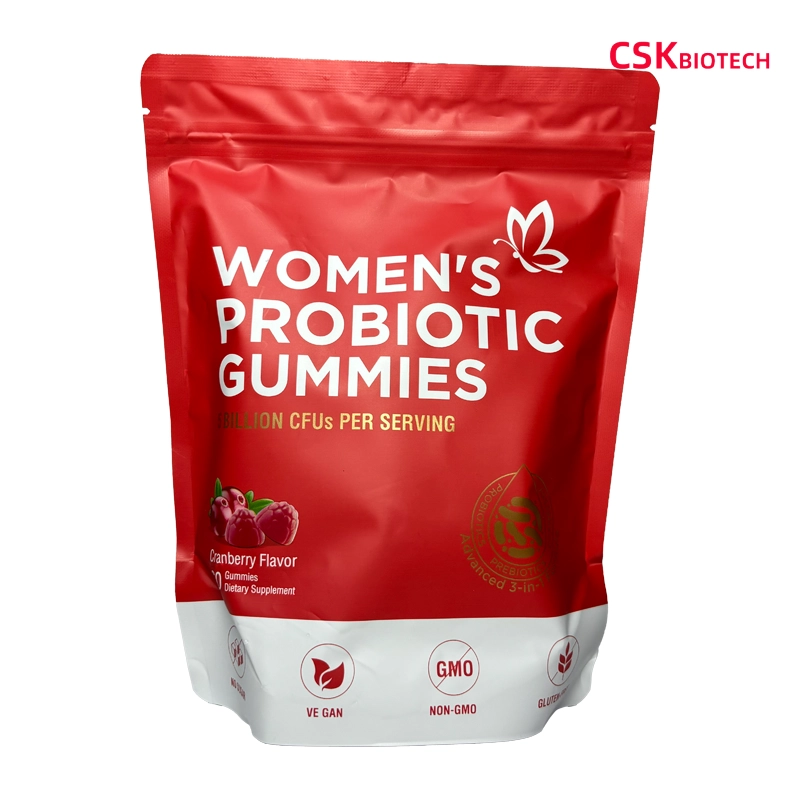
Women's Probiotic Gummies for Intimate & Digestive Wellness | Custom Gummy Manufacturing
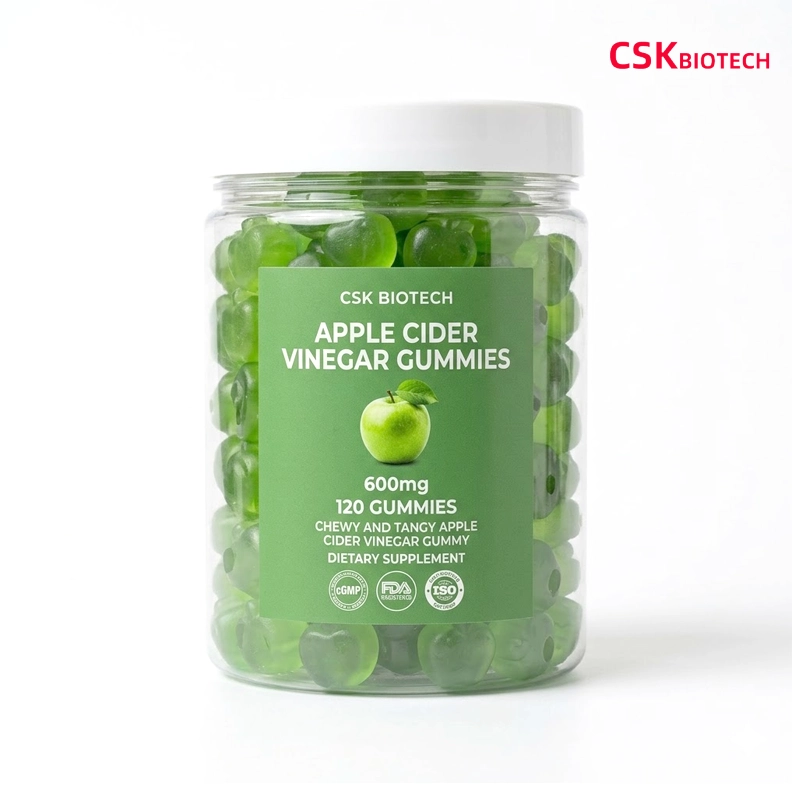
Apple Cider Vinegar Gummies with "The Mother" - Daily Wellness & Digestive Health Support, Apple Flavor - 120 Count
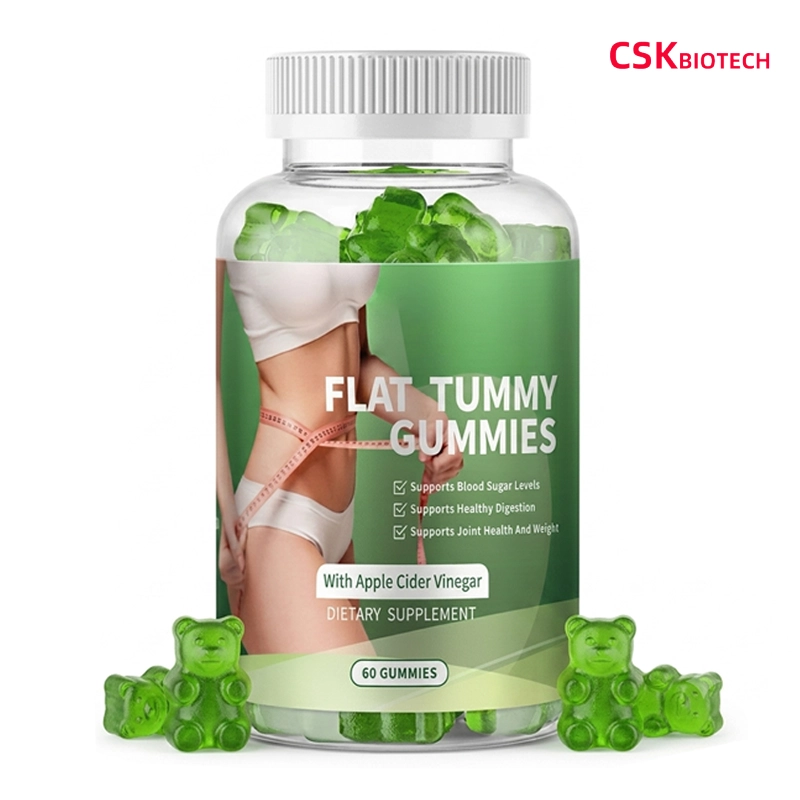
Apple Cider Vinegar Gummies for Digestive and Blood Sugar Support | Custom Gummy Manufacturing
Apple Cider Vinegar Gummies from CSK Biotech offer targeted digestive and blood sugar support in a convenient gummy form. Designed for custom gummy manufacturing, they ensure consistent quality and precise formulation to meet your product development needs.
Creatine Gummies Manufacturer for Custom Sports Nutrition Supplements
CSK Biotech manufactures creatine gummies with customizable creatine monohydrate dosage, flavors, textures, colors, bottle packaging, pouch packaging, and private label solutions. Designed for sports nutrition, fitness, and active lifestyle brands, our OEM/ODM service helps you develop market-ready creatine gummy supplements with reliable production and quality control.
Request a Quote for Dietary Supplement Contract Manufacturing
If you need CDMO services for health foods, nutritional supplements, or cosmetics, our team of experts is ready to provide you with customized solutions and quotes.


Contact


cskmanufacture
CSK Biotech Dietary Supplements
Guangzhou Changshengkang Biotechnology Co.,Ltd