

Custom gummy dietary supplements Manufacturers and Suppliers

- Why Bespoke Gummy Development Needs a Manufacturing Plan
- Start with a product brief that can be engineered
- Assess formulation and prototype capability
- Compare standard products with custom development
- How to Vet a Supplier from Development Through Production
- Verify quality systems and regulatory responsibilities
- Review testing, traceability, and product release
- Protect specifications, formula ownership, and confidentiality
- Regional Logistics, Commercial Terms, and Launch Readiness
- Validate the regional supply route before placing an order
- Model capacity, minimums, and total landed cost
- Use a contract and scorecard that support a long-term partnership
- Frequently Asked Questions
Custom gummy dietary supplements require coordinated expertise in formulation, ingredient sourcing, gummy processing, packaging, regulatory review, and quality assurance. A capable manufacturing partner should be able to translate a product brief into a feasible formula, provide documented prototype and scale-up stages, explain its quality system, and confirm how it will protect specifications and confidential information. Since no target region was provided, buyers should verify local rules, import duties, lead times, and distribution requirements with the relevant authorities and logistics providers before selecting a supplier.
Why Bespoke Gummy Development Needs a Manufacturing Plan
Start with a product brief that can be engineered
A manufacturer can assess a project more accurately when the brief describes the intended consumer, sales markets, serving size, target active ingredients, flavor direction, dietary preferences, packaging format, and expected annual volume. Identify whether the product is intended to be sugar-free, vegan, gelatin-based, pectin-based, allergen-conscious, or made with a particular color or sweetener system. Each preference can affect texture, process conditions, ingredient availability, stability, cost, and production yield. Buyers should also state any ingredient exclusions and provide a target price range, while recognizing that the final cost depends on formula complexity, batch size, testing, and packaging.
For gummy dietary supplements, the active ingredient is not simply added to a candy-like base. Its solubility, taste, heat sensitivity, particle size, and interaction with acids, minerals, sweeteners, and gelling agents can shape the manufacturing approach. A high-dose mineral, for example, may create a pronounced taste or texture challenge, while certain heat-sensitive ingredients may require careful process design. Ask the supplier to explain the constraints and trade-offs behind its recommendations, rather than accepting a proposed formula without a technical rationale.
Assess formulation and prototype capability
Request a defined development sequence: initial feasibility review, bench formulation, sample review, revisions, pilot or scale-up batch, and production approval. Agree on what each stage includes, who supplies or pays for ingredients, how many revision rounds are included, and how samples will be evaluated. A prototype should be assessed for more than flavor. Review piece weight, dimensions, chew, stickiness, coating, appearance, serving count, and how the product behaves after storage in the intended package.
For gummy dietary supplements, prototype approval should document the formula version and relevant acceptance criteria. Taste panels can help identify consumer preferences, but they do not replace analytical testing or stability assessment. Ask whether samples are representative of the intended process and whether a pilot run is needed to reveal scale-dependent issues such as depositing consistency, drying behavior, demolding, or packaging speed. The supplier should distinguish clearly between an exploratory sample and a production-equivalent sample.
Compare standard products with custom development
Private-label catalogue products can shorten launch timelines when a buyer accepts an existing formula and format. A bespoke program offers more control over composition and presentation, but it generally requires more technical review, approvals, and time. Compare the options against the commercial objective instead of assuming custom is always preferable. The table below provides a starting point for a supplier discussion; actual timelines and costs vary by product, facility, testing plan, and market.
| Decision factor | Catalogue or standard product | Custom formulation |
|---|---|---|
| Formula | Existing specification with limited changes | Developed around agreed ingredient and serving requirements |
| Development effort | Often lower if the product and label fit the buyer’s needs | Requires feasibility work, samples, revisions, and approvals |
| Distinctiveness | Usually relies on brand, packaging, or positioning | Can differentiate formula, sensory profile, format, and presentation |
| Cost drivers | Order quantity, packaging choice, and any permitted modifications | Development, ingredient sourcing, testing, production scale, and packaging |
| Best fit | Market testing or a faster launch using an established specification | Specific product requirements that an existing item cannot meet |
How to Vet a Supplier from Development Through Production
Verify quality systems and regulatory responsibilities
Ask for a current description of the facility’s quality management system, relevant certifications, audit process, batch documentation, deviation handling, complaint process, and product-release controls. A certificate can be useful, but buyers should confirm its scope, issuing organization, validity, and whether it covers the actual site and activities involved in their project. Consider a risk-based audit or qualified third-party assessment when the product, market, or purchase volume warrants it.
Regulatory obligations depend on the product classification and the markets where it will be made, sold, and imported. For products subject to United States dietary supplement rules, review the FDA’s dietary supplement information and the applicable current good manufacturing practice requirements in 21 CFR Part 111. These references are not a substitute for market-specific regulatory advice. Confirm which party is responsible for formula compliance, label review, claims substantiation, notifications where applicable, and import documentation. Put those responsibilities in the contract and product specification.
Review testing, traceability, and product release
Ask the manufacturer to propose a test plan linked to the formula, intended claims, ingredient risks, and applicable market requirements. Depending on the product and risk assessment, this may include identity or potency testing for selected actives, microbiological testing, contaminant evaluation, and checks for physical attributes such as piece weight and moisture. Buyers should establish which tests are performed in-house, which are sent to qualified external laboratories, what methods are used, and whether results are reviewed against agreed specifications before release.
For gummy dietary supplements, confirm how the supplier controls raw-material approval, supplier qualification, lot traceability, rework, retained samples, and finished-goods disposition. Request a sample certificate of analysis and clarify whether it reports actual results or only pass/fail status. Ask how the manufacturer investigates a failed result and communicates a potential safety or quality issue. The Codex Alimentarius Commission publishes international food standards and guidance, including materials addressing food safety and contaminants; its Codex texts and standards can inform discussions, but do not automatically replace the rules of a particular destination market.
Protect specifications, formula ownership, and confidentiality
Before sharing a proprietary formula, target cost, or launch plan, establish confidentiality terms and identify exactly what information is protected. Contract terms should distinguish buyer-provided intellectual property from the manufacturer’s pre-existing know-how and any jointly developed improvements. Define who owns the final formula, process parameters, artwork, and test methods; whether the supplier may use the formula for other customers; and what happens to materials and records when the relationship ends.
Use a controlled product specification that identifies ingredient names and grades, approved suppliers where necessary, target quantities or ranges, manufacturing instructions at the appropriate level, finished-product criteria, packaging components, label version, and change-control requirements. For gummy dietary supplements, even a seemingly minor change to a gelling agent, flavor, sweetener, or active supplier can affect sensory results or product performance. Require written review and approval before material changes, and keep signed versions of specifications and sample approvals with the quality agreement.
Regional Logistics, Commercial Terms, and Launch Readiness
Validate the regional supply route before placing an order
Because the target region is unspecified, no reliable claim can be made here about local manufacturing advantages, tariffs, transit times, or customs procedures. Compare suppliers using the actual origin and destination, shipping mode, product classification, order volume, and required delivery window. Obtain written estimates for production lead time, transit time, customs clearance assumptions, and any temperature or humidity protections needed for the product. Confirm the named Incoterms rule and the precise point where responsibility, cost, and risk transfer.
Ask whether the manufacturer can provide export documents commonly requested for the destination, such as commercial invoices, packing lists, certificates of analysis, origin documentation, or other records required by local authorities. Requirements vary, so validate them with the importer of record, customs broker, and relevant regulator. Check whether packaging language, nutrition or supplement labeling, claims, and ingredient permissions meet destination-market rules before printed packaging is ordered. For supply chain quality management context, consult the ISO 22000 food safety management systems standard and verify the exact edition and certification scope relevant to a supplier.
Model capacity, minimums, and total landed cost
A quoted unit price alone does not show the full economics of a gummy project. Request a transparent breakdown of development charges, minimum order quantities, active ingredient procurement, packaging, testing, freight assumptions, and any storage or handling fees. Clarify whether unused packaging or raw materials remain the buyer’s property, whether they can be carried into a later order, and how price changes are handled if commodity costs or exchange rates move. Evaluate landed cost per sellable unit, not only factory cost per piece.
Ask the supplier to state normal and peak capacity, production slot booking rules, forecast expectations, and its approach to shortages or delayed ingredients. For gummy dietary supplements, ingredient lead times and packaging print schedules can constrain launch dates as much as manufacturing capacity. Share rolling forecasts where possible, set a firm purchase-order window, and agree on an escalation process if a key material becomes unavailable. If the product has a seasonal launch, build time for artwork approval, testing, production, freight, customs, and receiving inspection into the critical path.
Use a contract and scorecard that support a long-term partnership
A manufacturing agreement should cover specifications, forecast and order terms, quality responsibilities, change control, audit access, confidentiality, intellectual property, nonconformance handling, recall cooperation, insurance, liability, payment, termination, and dispute resolution. Have qualified legal and regulatory advisers review terms for the relevant jurisdictions. Avoid relying on informal emails for critical decisions such as formula ownership, substitutions, product release, and responsibility for label compliance.
After launch, evaluate performance against agreed indicators such as on-time delivery, batch acceptance, complaint rate, document accuracy, forecast adherence, and responsiveness to corrective actions. Schedule periodic reviews to assess consumer feedback, supply continuity, and possible improvements. A sound partnership is not defined by a sales presentation alone; it is demonstrated through controlled records, realistic commitments, prompt communication, and consistent execution. For gummy dietary supplements, this discipline helps buyers manage risk as volumes grow and specifications evolve.
Contact us with your target market, product brief, volume expectations, and development priorities to discuss the right custom gummy dietary supplement manufacturing approach for your project.
Frequently Asked Questions
What information should I provide when requesting a custom gummy supplement quote?
Provide the target market, intended consumer, active ingredients and serving size, sensory and dietary requirements, packaging format, forecast volume, launch timing, and target cost range. State any ingredient exclusions and identify the claims or label requirements you are considering.
How long does it take to develop a custom gummy dietary supplement?
Timing varies with formula complexity, ingredient availability, prototype revisions, testing, packaging approvals, and production capacity. Ask the supplier to provide a stage-by-stage schedule covering feasibility, samples, scale-up, testing, production, and shipping.
What quality documents should I request from a gummy manufacturer?
Request information about the site’s quality system and applicable certifications, a sample product specification and certificate of analysis, testing responsibilities, traceability and batch-release procedures, change control, and nonconformance handling. Verify certification scope and validity.
Who owns the custom gummy formula and related intellectual property?
Ownership depends on the contract. Clearly distinguish buyer-provided materials and intellectual property from the manufacturer’s pre-existing know-how and jointly developed work, and specify rights to the final formula, process information, artwork, and improvements before development begins.
How can I compare regional manufacturers when the destination market has different rules?
Compare suppliers using the actual manufacturing origin and destination. Verify applicable ingredient, labeling, claims, import, customs, and documentation requirements with the relevant regulator, importer of record, and customs broker; do not assume rules or tariffs are the same across markets.
What is the difference between a private-label gummy and a custom-formulated gummy?
A private-label product generally uses an existing formula with limited changes, while a custom-formulated product is developed around agreed ingredient, serving, sensory, or presentation requirements. Custom development can provide more differentiation but usually requires additional feasibility work, samples, approvals, and testing.
Unlocking Wellness: A Deep Dive into Nutraceutical Tablet Manufacturing Excellence
Third-Party Testing and Traceability for GMP Food Supplements
Comparing Compound Magnesium Capsule Dosages & Bioavailability
Softgel Supply Chain: Lead Times, Scalability and Risk Management
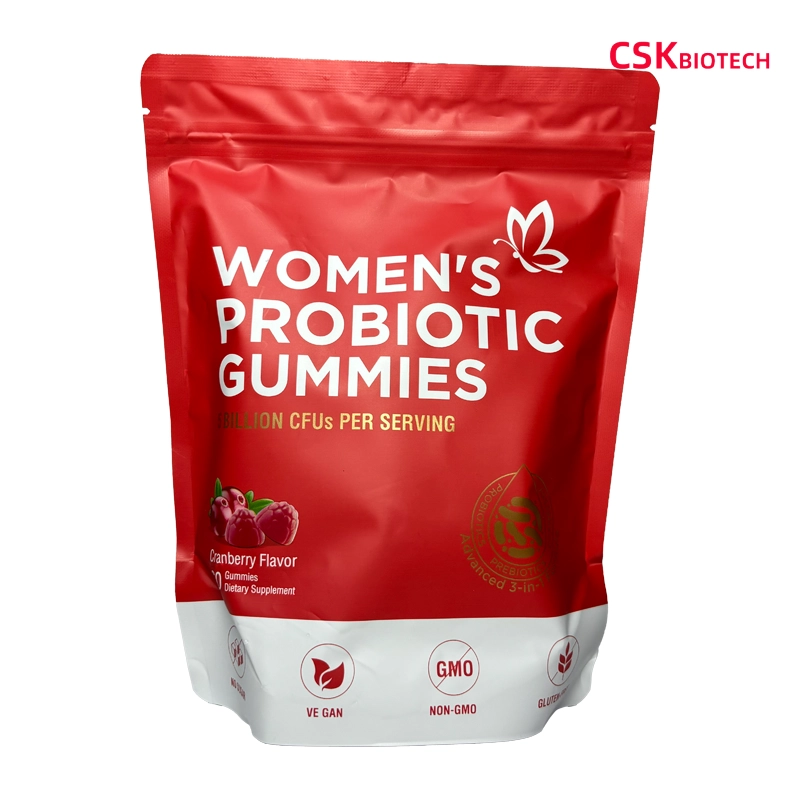
Women's Probiotic Gummies for Intimate & Digestive Wellness | Custom Gummy Manufacturing
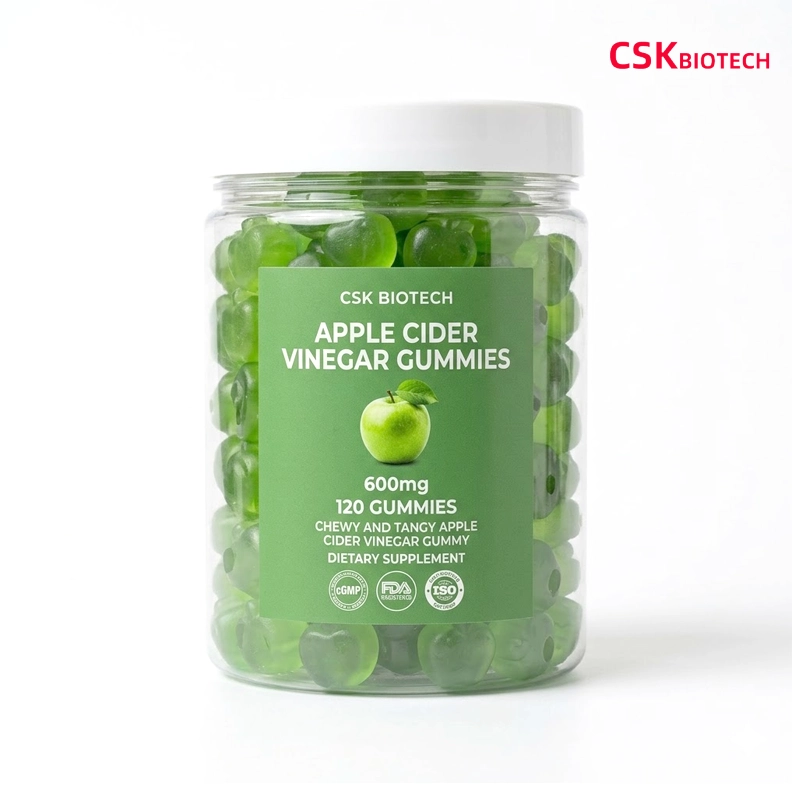
Apple Cider Vinegar Gummies with "The Mother" - Daily Wellness & Digestive Health Support, Apple Flavor - 120 Count
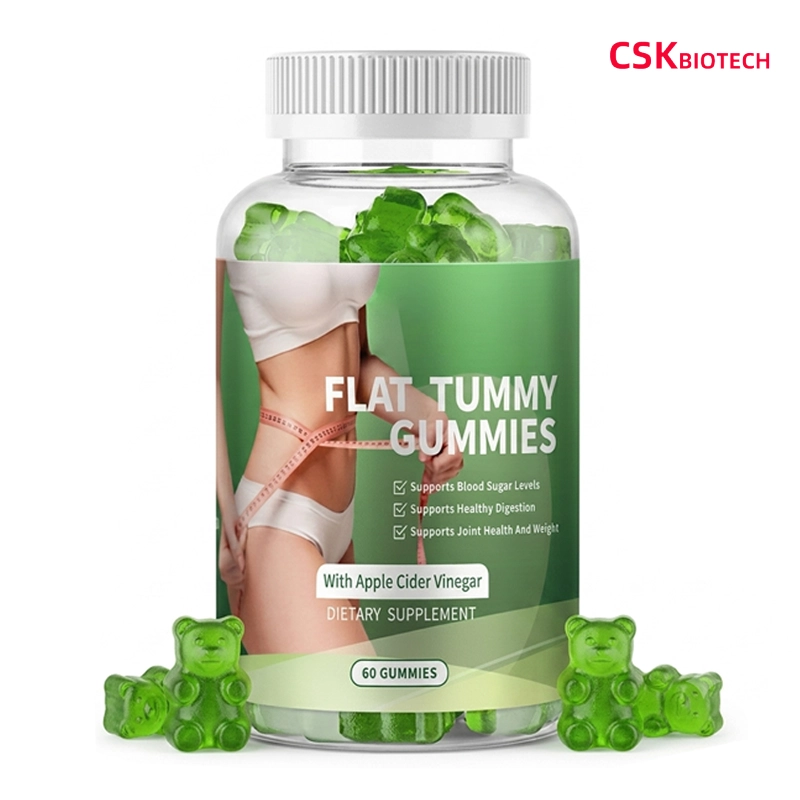
Apple Cider Vinegar Gummies for Digestive and Blood Sugar Support | Custom Gummy Manufacturing
Apple Cider Vinegar Gummies from CSK Biotech offer targeted digestive and blood sugar support in a convenient gummy form. Designed for custom gummy manufacturing, they ensure consistent quality and precise formulation to meet your product development needs.
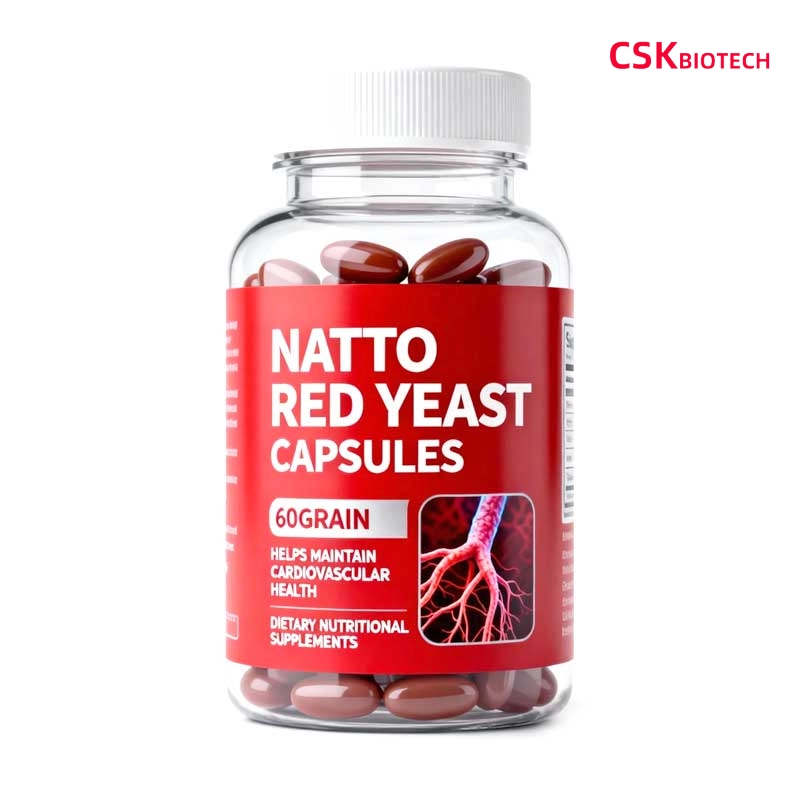
Creatine Gummies Manufacturer for Custom Sports Nutrition Supplements
CSK Biotech manufactures creatine gummies with customizable creatine monohydrate dosage, flavors, textures, colors, bottle packaging, pouch packaging, and private label solutions. Designed for sports nutrition, fitness, and active lifestyle brands, our OEM/ODM service helps you develop market-ready creatine gummy supplements with reliable production and quality control.
Request a Quote for Dietary Supplement Contract Manufacturing
If you need CDMO services for health foods, nutritional supplements, or cosmetics, our team of experts is ready to provide you with customized solutions and quotes.


Contact


cskmanufacture
CSK Biotech Dietary Supplements
Guangzhou Changshengkang Biotechnology Co.,Ltd