

Contract Manufacturing vs In-House Production: Cost Analysis

- How Manufacturers Decide Between Contract and In-House Production
- Executive overview for Nutritional Supplements Manufacturer decision-makers
- Cost drivers: What really determines cost per unit
- Regulatory and compliance cost considerations for Nutritional Supplements Manufacturer
- Quantitative example: illustrative cost model (per-unit comparison)
- Break-even framework and decision rule for Nutritional Supplements Manufacturer
- Non-financial factors: speed, flexibility, IP, and quality
- Comparative table: contract vs in-house (summary)
- When contract manufacturing is the clear choice for a Nutritional Supplements Manufacturer
- When in-house manufacturing makes strategic sense
- Case study (hypothetical): 500k-1M units — run the numbers
- Partner selection criteria for contract manufacturing (what to audit)
- CSK Biotech: CDMO profile and why they matter to Nutritional Supplements Manufacturer
- Why partner with CSK Biotech — competencies and unique strengths
- CSK Biotech main manufacturing capabilities
- Recommended decision checklist (actionable steps)
- FAQs
- 1. Is contract manufacturing always cheaper than building an in-house plant?
- 2. How do I calculate the break-even volume for building my own manufacturing?
- 3. What are typical hidden costs when outsourcing to a CDMO?
- 4. Can a Nutritional Supplements Manufacturer protect its formulas when outsourcing?
- 5. What certifications should I require from a contract manufacturer?
- 6. How long does it typically take to transfer a product to a CDMO?
- Contact & next steps
- References
How Manufacturers Decide Between Contract and In-House Production
Executive overview for Nutritional Supplements Manufacturer decision-makers
Choosing between contract manufacturing (outsourcing to a third-party CDMO) and in-house production is one of the most consequential financial and strategic decisions a Nutritional Supplements Manufacturer can make. The right choice affects unit costs, capital allocation, product quality, regulatory compliance, speed to market, and long-term agility. This article provides a structured cost analysis, practical modelling examples, and an operational checklist to help manufacturers—startups to enterprise—make an evidence-based decision.
Cost drivers: What really determines cost per unit
For a Nutritional Supplements Manufacturer, unit cost is driven by a mix of fixed and variable factors. Understanding which line items belong in each bucket is essential to accurate comparisons.
- Fixed costs (In-house heavy): plant and equipment depreciation, facility overhead (utilities, insurance, property taxes), salaried staff (R&D, QA, production management), validation and regulatory submissions, and capital maintenance.
- Variable costs (Both models): raw materials, packaging, direct labor, consumables, utilities proportional to throughput, and freight.
- Semi-variable or indirect costs: quality control testing frequency, return/warranty reserves, CAPA (corrective and preventive actions), and technology/IT costs—these scale with product complexity and regulatory burden.
Key implication: high fixed costs favor higher utilization (scale). If your forecasted volume is below utilization threshold, per-unit fixed cost becomes dominant and may favor contract manufacturing.
Regulatory and compliance cost considerations for Nutritional Supplements Manufacturer
Compliance costs are non-negotiable and often underestimated. In the dietary supplement sector, manufacturers must comply with FDA's current Good Manufacturing Practices (21 CFR Part 111) in the U.S., plus local regulations for target markets. Meeting these standards requires documented systems, routine testing, environmental controls, and qualified personnel.
When comparing costs, include ongoing QA/QC spend, stability testing, third-party testing, and the cost/time of regulatory registrations. Contract manufacturers with multi-country experience can amortize these costs across many clients, lowering your share compared with standing up all capabilities in-house.
Quantitative example: illustrative cost model (per-unit comparison)
Below is an illustrative cost model comparing in-house production vs contract manufacturing for a capsule product. Figures are hypothetical but use realistic industry categories; they are meant to show how break-even depends on volume and assumptions.
| Cost Category | Assumptions | In-House (per 100k units) | Contract Manufacturer (per 100k units) |
|---|---|---|---|
| Capital amortization | Equipment & setup amortized over 5 years | $0.12 | $0.00 |
| Facility & utilities | Allocated per unit | $0.10 | $0.03 |
| Direct labor | Operators, QA time | $0.20 | $0.08 |
| QC & testing | In-process, release, stability | $0.08 | $0.05 |
| Packaging & materials | Labels, bottles, cartons | $0.35 | $0.35 |
| Overhead & compliance | QA systems, documentation | $0.12 | $0.05 |
| Total | $0.97 | $0.56 |
Interpretation: At 100k units, contract manufacturing shows a lower per-unit cost due to capital and overhead amortization. However, if volume increases substantially (e.g., >1M units) and in-house utilization becomes high, the in-house per-unit cost can decline materially. Always run sensitivity by volume and product complexity.
Break-even framework and decision rule for Nutritional Supplements Manufacturer
To decide, perform a break-even calculation comparing total annual cost under both models:
- Estimate annual fixed in-house costs (F_in).
- Estimate variable in-house cost per unit (V_in).
- Get contract price per unit (P_out) and any setup fees (S_out).
- Solve for Q where F_in + V_in * Q = P_out * Q + S_out.
If forecasted annual Q is below break-even quantity, contract manufacturing is typically more economical. If above, in-house may pay off long-term—assuming capacity and managerial capability exist.
Non-financial factors: speed, flexibility, IP, and quality
Costs are necessary but not sufficient. Consider:
- Speed to market: Contract manufacturers often handle R&D-to-production transitions faster due to pre-validated lines and formulation libraries.
- Flexibility: CDMOs let you switch SKUs/volumes seasonally without idle capacity risk.
- Intellectual property and control: In-house gives tighter control of proprietary formulas; evaluate NDA strength and facility safeguards if outsourcing.
- Quality reputation risk: A supplier’s quality failure damages CSK Biotech—vendor selection and audits are critical.
Comparative table: contract vs in-house (summary)
| Dimension | Contract Manufacturing (CDMO) | In-House Production |
|---|---|---|
| Initial capital | Low | High |
| Per-unit cost at low volume | Lower | Higher |
| Per-unit cost at high volume | Competitive | Lower (if fully utilized) |
| Speed to market | Faster (pre-validated) | Slower (setup & validation) |
| Control over IP | Medium (depends on contracts) | High |
| Regulatory burden | Shared (vendor handles most) | On your company |
When contract manufacturing is the clear choice for a Nutritional Supplements Manufacturer
Common scenarios where outsourcing is preferable:
- Early-stage brands seeking product-market fit without heavy capital outlay.
- Companies launching multiple SKUs or seasonal lines that require flexible capacity.
- Brands targeting multiple geographies where regulatory and packaging requirements vary.
- Organizations with limited internal QA/regulatory experience wanting to leverage a certified CDMO.
When in-house manufacturing makes strategic sense
Situations favoring in-house investment:
- Sustained high-volume demand that justifies CAPEX and reduces per-unit costs.
- Highly proprietary formulations or processes where IP control is paramount.
- Brands that require extreme control over production cadence, confidentiality, or specialized equipment not commonly available among CDMOs.
Case study (hypothetical): 500k-1M units — run the numbers
Example: A Nutritional Supplements Manufacturer expects 600k units in year 1, scaling to 1.2M in year 2. Using the earlier table assumptions, outsourcing at 600k yields lower per unit cost and avoids $1.5M in CAPEX. If confidence on 1.2M exists and margins justify CAPEX payback within 3–5 years, a mixed approach (initially outsource, then partial in-house) may be optimal. Many firms adopt hybrid strategies: keep core SKUs onshore/in-house and outsource new or volume-variable SKUs.
Partner selection criteria for contract manufacturing (what to audit)
When evaluating CDMOs, audit the following:
- Certifications: GMP/GMPC, HACCP, ISO, and FDA registration status.
- Production lines and capacity: ability to handle softgels, tablets, powders, gummies, and liquids.
- R&D & formulation capability: pilot-scale testing, stability programs, and customization.
- Quality systems: deviation management, batch traceability, third-party testing history.
- Supply chain resilience: multiple raw material sources and contingency planning.
- Commercial terms: MOQ, lead times, pricing tiers, and IP clauses.
CSK Biotech: CDMO profile and why they matter to Nutritional Supplements Manufacturer
Founded in 2008, CSK Biotech is a leading high-tech enterprise dedicated to the R&D and manufacturing of dietary supplements, health foods, and cosmetics. With a GMP-certified 2,000㎡ factory, seven advanced production lines, and an annual capacity exceeding 4.5 billion softgels and 1.5 billion tablets, we deliver high-quality, large-scale manufacturing solutions for global brands. Our core manufacturing services include contract manufacturing of capsules, tablets, powders, gummies, and liquids, and we also provide professional R&D, formulation development, and free packaging services.
Why partner with CSK Biotech — competencies and unique strengths
As a professional Contract Development and Manufacturing Organization (CDMO), CSK Biotech provides end-to-end solutions that cover the entire product lifecycle—from concept development, formulation research, pilot testing, and stability verification to production, regulatory registration, and marketing support. We offer three cooperation models: ODM for market-oriented product innovation, CDM for tailor-made product design, and OEM for precise, formula-based production to ensure accuracy and timely delivery.
Certified by GMPC, FDA, HACCP, and ISO, CSK Biotech adheres to the highest international standards of quality and safety. With strong innovation capabilities, advanced technology, and a customer-focused approach, we are committed to helping global partners create effective, safe, and competitive health products that meet the growing demands of consumers worldwide.
CSK Biotech main manufacturing capabilities
- Tablet supplements manufacture
- Supplement manufacturing softgels
- Capsule supplement manufacturing
- Liquid supplement contract manufacturing
- Powder supplement manufacturing
- Gummy supplement manufacture
CSK Biotech's scale, certifications, and flexible cooperation models make it a strong candidate when a Nutritional Supplements Manufacturer seeks to outsource safely while preserving formulation integrity and speed-to-market.
Recommended decision checklist (actionable steps)
- Run precise volumetric forecasts for 1–5 years and calculate break-even quantities.
- Map full cost stacks (direct, indirect, regulatory) for both in-house and contract routes.
- Shortlist CDMOs and request sample costing, MOQ, lead times, and references.
- Audit vendors for certifications and QA performance; request batch testing examples.
- Model hybrid scenarios (partial in-house + contract) for flexibility.
- Factor non-financial impacts: IP, time-to-market, and brand risk tolerance.
FAQs
1. Is contract manufacturing always cheaper than building an in-house plant?
No. Contract manufacturing is often cheaper at low-to-medium volumes because it avoids CAPEX and spreads compliance costs across many clients. At very high, sustained volumes and with high utilization, in-house production can be more cost-effective. Run a break-even analysis to confirm.
2. How do I calculate the break-even volume for building my own manufacturing?
Calculate total annual fixed in-house costs (facility, depreciation, salaried staff), then divide by (contract price per unit minus in-house variable cost per unit). The result is the annual volume at which costs equalize. Use conservative forecasts and run sensitivity analysis.
3. What are typical hidden costs when outsourcing to a CDMO?
Hidden costs include changeover or formulation transfer fees, freight and customs for international partners, additional QC testing, longer lead times leading to inventory costs, and IP protection measures. Negotiate these terms up front.
4. Can a Nutritional Supplements Manufacturer protect its formulas when outsourcing?
Yes. Use strong NDAs, IP clauses in contracts, limit access to full formulations where possible (split batches or restrict knowledge), and audit vendor security practices. Choose established CDMOs with robust confidentiality reputations.
5. What certifications should I require from a contract manufacturer?
At minimum: GMP/GMPC compliance, HACCP for food safety, and relevant ISO standards (for example ISO 9001 or ISO 22000). For U.S. market supply, ensure familiarity with FDA dietary supplement cGMP requirements (21 CFR Part 111).
6. How long does it typically take to transfer a product to a CDMO?
Transfer timelines vary by complexity: 8–16 weeks for standard tablet or capsule formulations, 12–24 weeks for softgels or customized gummies requiring new molds or tooling, and longer if regulatory registrations or stability data are required. Discuss timelines during vendor selection.
Contact & next steps
If your company is evaluating outsourcing vs in-house manufacturing, request a detailed cost model and capability audit. For manufacturers seeking a reliable CDMO partner, consider CSK Biotech’s turnkey services—R&D, production, compliance, and global registration support. Contact CSK Biotech to discuss ODM, CDM, or OEM cooperation models and request a quote or facility tour.
References
- U.S. Food & Drug Administration — Dietary Supplement Current Good Manufacturing Practices (21 CFR Part 111). https://www.fda.gov/food/dietary-supplements (accessed 2025-12-18)
- Grand View Research — Dietary Supplements Market Size & Trends. https://www.grandviewresearch.com/industry-analysis/dietary-supplements-market (accessed 2025-12-18)
- Harvard Business Review — The Make-or-Buy Decision. https://hbr.org/2007/10/the-make-or-buy-decision (accessed 2025-12-18)
- Food and Agriculture Organization (FAO) — HACCP Principles. http://www.fao.org/food-safety/en/ (accessed 2025-12-18)
- ISO — Management system standards. https://www.iso.org/standards. (accessed 2025-12-18)
Note: Cost figures in the illustrative model are for demonstration. Use actual quotes from suppliers and your accounting data to produce precise results.
Custom custom formulation dietary supplements Manufacturers and Suppliers
Unlock Your Brand's Potential: The Definitive Guide to Private Label Tablet Supplements
Top 10 softgel supplement Manufacturers and Supplier Brands
Unlocking Your Brand's Potential: The Power of Custom Tablet Formulation Services
文章
What is your minimum order quantity (MOQ)?
MOQ depends on the dosage form, formula complexity, and packaging requirements. CSK Biotech offers flexible MOQs to support:
-
· Start-up brands
-
· New product launches
-
· Large-scale production orders
Please contact us for specific MOQ details.
Can CSK Biotech customize formulations?
Absolutely. We offer full formulation customization, including:
-
· Active ingredients selection
-
· Dosage optimization
-
· Flavor and taste adjustment
-
· Stability and bioavailability improvement
Our technical team ensures that each formula is safe, effective, and suitable for the target market.
Do you provide packaging services?
Yes. We offer a variety of packaging solutions, including:
-
· Bottles and jars
-
· Sachets and sticks
-
· Bulk packaging
-
· Customized labeling options
Packaging can be tailored to your brand and target market needs.
What ingredients can be used in your products?
We support a wide range of ingredients, such as:
-
· Vitamins and minerals
-
· Herbal extracts
-
· Amino acids
-
· Probiotics and prebiotics
-
· Functional ingredients for immunity, beauty, sleep, energy, and metabolism
All raw materials are carefully selected and quality-tested before use.
What quality control measures do you have?
Our quality control system includes:
-
· Raw material inspection and verification
-
· In-process quality monitoring
-
· Finished product testing
-
· Batch record management and traceability
Quality and compliance are integrated into every stage of our manufacturing process.
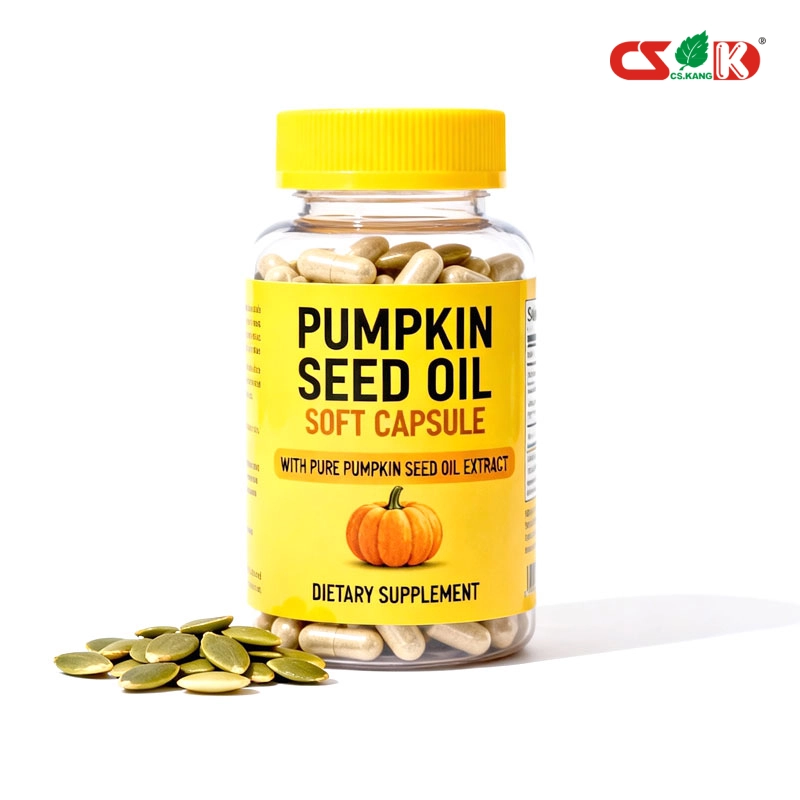
Cold-Pressed Pumpkin Seed Oil Capsules: Rich in Zinc, Phytosterols & Fatty Acids
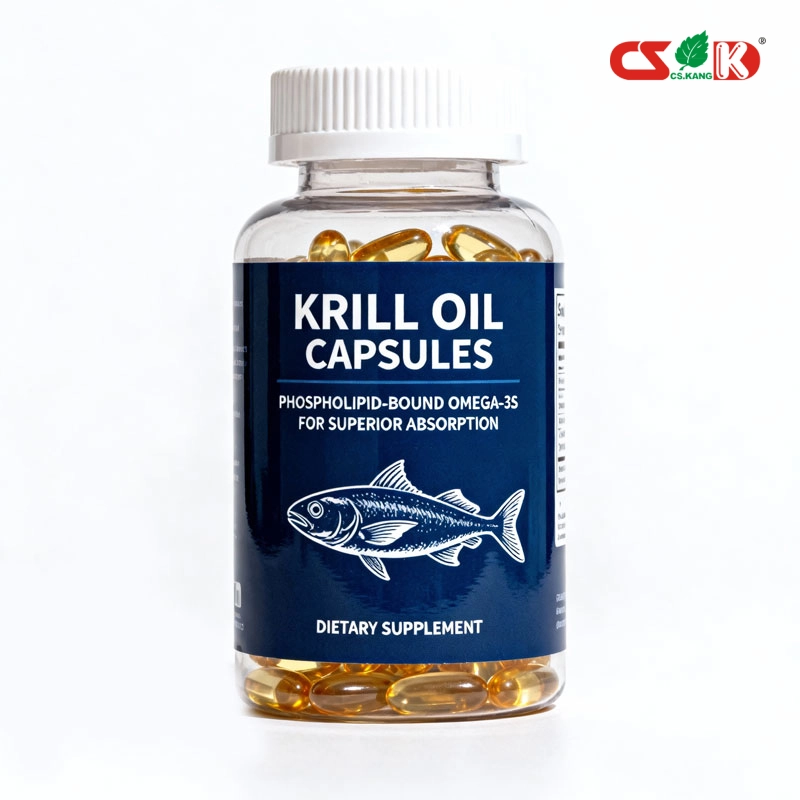
Supports Heart & Brain Health: Krill Oil Rich in EPA & DHA
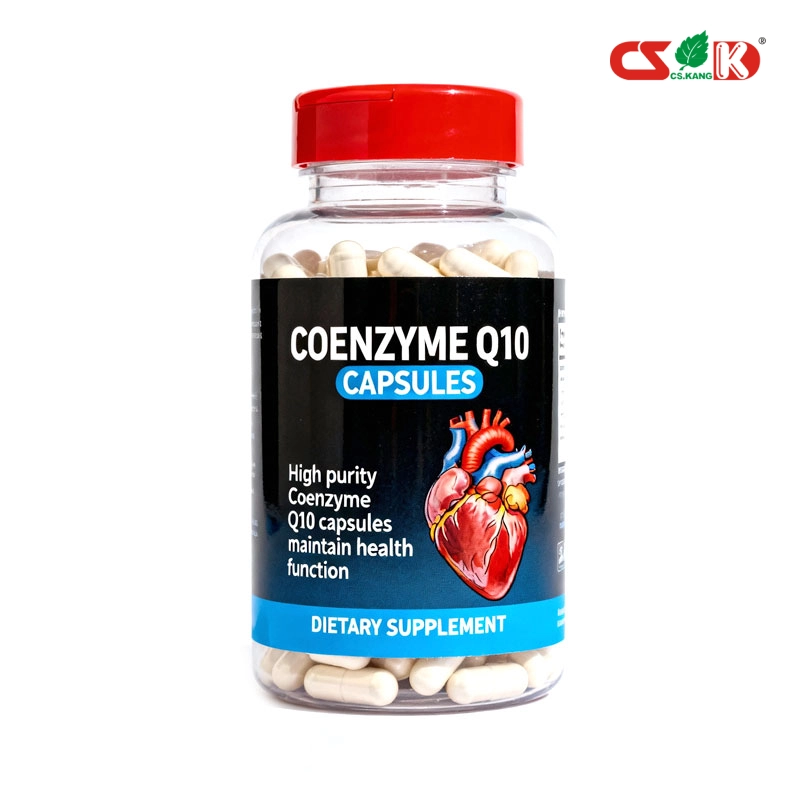
High purity Coenzyme Q10 capsules maintain heart health function
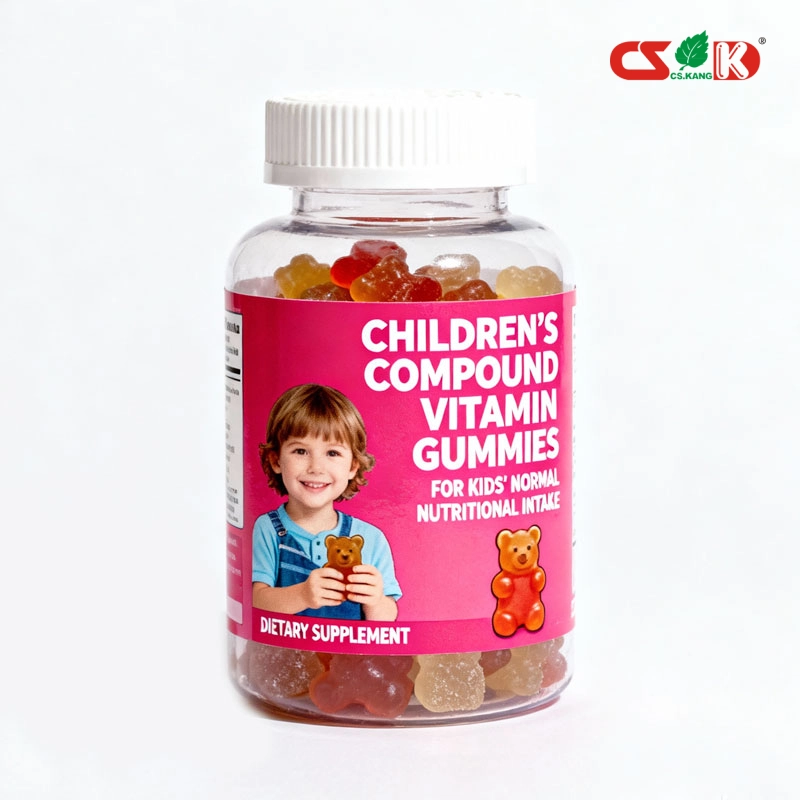

manufactoryinchina
CSK Biotech Dietary Supplements