
How to Choose the customized nutritional supplements manufacturer and supplier ?

Practical guide to selecting a customized nutritional supplements manufacturer and supplier. Covers capability checks, quality & regulatory requirements, production models (ODM/CDM/OEM), costing, packaging, and supplier evaluation criteria—backed by industry standards and supplier examples.
- Why the right supplement manufacturing partner matters
- Market context and demand for customized nutritional supplements
- Business impact: quality, supply continuity and brand trust
- Semantic keywords for customized nutritional supplements
- How to choose the customized nutritional supplements manufacturer and supplier
- Define product goals, target market and formulation requirements
- Evaluate manufacturing capabilities and capacity
- Ask about MOQ, lead times and pricing transparency
- Quality, compliance and certification checks
- Verify operational certifications (GMP, HACCP, FDA, ISO)
- Require third-party testing and certificates of analysis (CoA)
- Traceability and raw material sourcing
- Service models, R&D support, and commercial considerations
- Understand ODM vs CDM vs OEM and choose the right cooperation model
- Packaging, labeling and fulfillment services
- Intellectual property (IP) protection and confidentiality
- Comparison checklist: What to compare between manufacturers
- Practical procurement and audit steps
- Request detailed documentation and sample batches
- Perform supplier audits and reference checks
- Negotiate contracts with clear quality and delivery KPIs
- Conclusion
- Frequently Asked Questions
- Q: What is the difference between OEM, ODM and CDM?
- Q: How important are certifications like GMP, HACCP and ISO?
- Q: What minimum information should I request from a supplier before starting a partnership?
- Q: How can I verify product claims and label compliance?
Choosing the right partner for customized nutritional supplements is a business-critical decision that affects product safety, regulatory compliance, speed-to-market, and brand reputation. This guide explains how to evaluate manufacturers and suppliers—covering manufacturing capacity (capsules, softgels, tablets, gummies, powders, liquids), certifications (GMP, FDA, HACCP, ISO), R&D and formulation services, MOQ and lead times, third-party testing, and packaging options—to help brands scale responsibly and profitably.
Why the right supplement manufacturing partner matters
Market context and demand for customized nutritional supplements
The global dietary supplements market exceeds $140 billion and continues to grow at a steady, high-single-digit compound annual growth rate (CAGR). Brands entering this space need a manufacturer able to deliver custom formulations, private label solutions, and reliable contract manufacturing while meeting regulatory demands. Partnering with an experienced contract development and manufacturing organization (CDMO) reduces product risk and accelerates time-to-market.
Business impact: quality, supply continuity and brand trust
Quality failures or supply interruptions directly damage consumer trust and can lead to recalls or sanctions. Choosing a manufacturer with robust quality control, traceability, and scalable production—capable of producing softgels, tablets, capsules, gummies, powders, and liquids—helps ensure consistent product performance and predictable margins. For example, CSK Biotech provides a GMP-certified 2,000㎡ factory and seven production lines with an annual capacity exceeding 4.5 billion softgels and 1.5 billion tablets, enabling large-scale brand supply.
Semantic keywords for customized nutritional supplements
custom formulations, private label supplements, contract manufacturing, CDMO, OEM, ODM, softgels, tablets, capsules, gummies, powders, liquid supplements, formulation development, stability testing, GMP, HACCP, FDA compliance
How to choose the customized nutritional supplements manufacturer and supplier
Define product goals, target market and formulation requirements
Start by documenting the product concept: active ingredients, target dose, delivery form (capsule, tablet, gummy, powder, liquid, softgel), target shelf life, desired certifications (organic, non-GMO, vegan), and pricing targets. This specification lets you evaluate whether suppliers provide formulation development and pilot testing (CDM/ODM) or only formula-conforming production (OEM). Brands aiming for differentiated, science-backed products should prioritize CDMO partners with R&D and stability testing capabilities.
Evaluate manufacturing capabilities and capacity
Check if the supplier’s equipment matches your product’s manufacturing needs (encapsulation lines, tablet presses, gummy casting, liquid filling). Key metrics to confirm: installed annual capacity, number of production lines, ability to scale, batch size flexibility, and contingency capacity for demand spikes. For instance, CSK Biotech's seven advanced production lines and high annual capacity support both small-batch launches and large-scale production runs.
Ask about MOQ, lead times and pricing transparency
Minimum order quantities (MOQs), lead times, and price cadence differ widely. Clarify raw-material sourcing policies (single vs multiple suppliers), costing drivers, freight options, and volume discounts. A reliable supplier will provide sample runs, pilot batches, and transparent cost breakdowns (materials, labor, packaging, testing). Expect MOQs to vary by format: gummies and softgels often have higher MOQs than powder stick packs or capsules.
Quality, compliance and certification checks
Verify operational certifications (GMP, HACCP, FDA, ISO)
Certifications indicate a manufacturer’s commitment to quality systems. Confirm certificates and their scopes: Good Manufacturing Practice (GMP/GMPC), Hazard Analysis and Critical Control Points (HACCP), ISO quality management (e.g., ISO 9001), and relevant national registrations. The U.S. Food and Drug Administration (FDA) provides guidance on dietary supplement regulation and current good manufacturing practices (cGMPs) for dietary supplements—see FDA resources for details: FDA – Dietary Supplements and cGMP expectations: FDA – cGMP for Dietary Supplements.
Require third-party testing and certificates of analysis (CoA)
Insist on independent testing for identity, potency, microbiology, contaminants (heavy metals, pesticides, mycotoxins), and allergen screening. A Certificate of Analysis (CoA) should accompany each production batch. Look for suppliers who conduct routine stability testing and retain retained samples for verification. Reputable manufacturers will also support third-party lab audits and provide COAs on request.
Traceability and raw material sourcing
Traceability from raw material origin to finished product is essential for recalls and regulatory audits. Ask potential suppliers about supplier qualification processes, material specifications, supplier audits, and whether they maintain electronic batch records. Certification programs and ingredient traceability reduce risk and support marketing claims (e.g., organic, non-GMO).
Service models, R&D support, and commercial considerations
Understand ODM vs CDM vs OEM and choose the right cooperation model
Different partnership models suit different needs: ODM (Original Design Manufacturer) handles market-oriented product innovation and complete product design; CDM (Contract Development Manufacturer) focuses on tailor-made formulation and technical development; OEM (Original Equipment Manufacturer) produces strictly according to your provided formula. CSK Biotech offers all three models—ODM for market-ready innovation, CDM for custom design, and OEM for formula-based production—allowing brands to select the level of involvement and IP ownership that fits their strategy.
Packaging, labeling and fulfillment services
Packaging choices affect shelf life, regulatory compliance, and consumer experience. Confirm if the manufacturer provides free packaging services, custom packaging design, child-resistant closures, blister packs, or bulk fill. Also clarify label copy support for claims, nutritional facts, and regulatory registration assistance. Suppliers offering integrated packaging, serialization, and contract packaging reduce supply-chain complexity.
Intellectual property (IP) protection and confidentiality
When developing custom formulations, request Non-Disclosure Agreements (NDAs) and clear IP terms. Ensure the contract covers formula ownership, co-development arrangements, confidentiality, and exit terms. Reputable CDMOs will have standard NDAs and be willing to negotiate IP clauses to protect brand assets.
Comparison checklist: What to compare between manufacturers
| Evaluation Item | What to look for | CSK Biotech (example) |
|---|---|---|
| Production formats | Softgels, tablets, capsules, gummies, powders, liquids | All formats supported (capsules, tablets, powders, gummies, liquids, softgels) |
| Annual capacity | Ability to scale from pilot to large volume | >4.5 billion softgels & >1.5 billion tablets per year |
| Certifications | GMP, FDA, HACCP, ISO or equivalent | GMPC, FDA, HACCP, ISO |
| R&D & formulation | Pilot testing, stability, formulation optimization | Professional R&D and formulation development with stability verification |
| MOQ & lead time | Reasonable MOQs, transparent lead times and pilot batch options | Flexible cooperation models: ODM, CDM, OEM; supports pilot testing |
| Packaging services | Custom packaging, labeling support, co-packing | Free packaging services and marketing support |
Practical procurement and audit steps
Request detailed documentation and sample batches
Ask for: company certificates, recent CoAs, SOP summaries, audit reports, retained sample policy, and pilot batch samples. Test samples in an independent lab to verify potency and microbiology. Request production photos or virtual factory tours if on-site audits are not possible.
Perform supplier audits and reference checks
Perform on-site or third-party audits focusing on sanitation, cross-contamination controls, allergen management, and electronic batch-record systems. Check references—other brands and clients—and ask about past regulatory inspections or recalls.
Negotiate contracts with clear quality and delivery KPIs
Contractually define quality metrics (potency variance, microbial limits), delivery SLAs, penalty clauses for missed deliveries, warranty terms, and IP ownership. Include clauses for corrective actions, change control, and business continuity planning.
Conclusion
Choosing the right customized nutritional supplements manufacturer and supplier requires a structured evaluation of capabilities, certifications, R&D support, and commercial terms. Prioritize partners who combine robust quality systems (GMP, HACCP, FDA awareness), full-format production capability (softgels, tablets, capsules, gummies, powders, liquids), transparent testing (CoAs, third-party labs), and flexible cooperation models (ODM, CDM, OEM). Companies like CSK Biotech offer end-to-end CDMO services—R&D, pilot testing, stability verification, large-scale production, and packaging—backed by international certifications and high annual capacity, making them suitable partners for brands scaling globally. For regulatory guidance, consult resources such as the FDA’s dietary supplement pages and the dietary supplement overview on Wikipedia: Dietary supplement — Wikipedia and FDA – Dietary Supplements.
Frequently Asked Questions
Q: What is the difference between OEM, ODM and CDM?
A: OEM (Original Equipment Manufacturer) produces products exactly to your formula or specification. ODM (Original Design Manufacturer) provides product designs and ready-to-market products. CDM (Contract Development Manufacturer) focuses on customized formulation and development support—ideal for brands wanting unique, science-backed products with technical collaboration.
Q: How important are certifications like GMP, HACCP and ISO?
A: Very important. Certifications show the manufacturer follows recognized quality and safety systems. GMP and HACCP focus on manufacturing controls and hazard management; ISO covers quality management systems. These certifications reduce regulatory and product risks.
Q: What minimum information should I request from a supplier before starting a partnership?
A: Request: (1) Certificates (GMP, HACCP, ISO), (2) list of production formats and capacities, (3) sample CoAs, (4) pilot batch availability and costs, (5) lead times and MOQs, (6) R&D and formulation capabilities, and (7) reference clients and audit reports.
Q: How can I verify product claims and label compliance?
A: Work with the manufacturer and legal/regulatory consultants to verify label claims, ingredient compliance, and country-specific requirements. Confirm structure/function or health claims with substantiation and ensure labeling meets destination market regulations. The FDA provides guidance for claims and required labeling for U.S. markets: FDA Food Guidance.
Ready to develop or scale your customized nutritional supplements? Contact CSK Biotech for a consultation—visit cskbiotech.com or email steve@cskbiotech.com for fast, professional CDMO support.
Custom best food supplement company wholesale Manufacturers and Suppliers
Third-Party Testing and Certification for Supplement Manufacturers
Custom best food supplement company for vitamins Manufacturers and Suppliers
Unlocking Success: Your Guide to Tablet Contract Manufacturing for Nutritional Supplements
文章
Who is CSK Biotech?
CSK Biotech is a professional biotechnology company specializing in OEM/ODM contract manufacturing of dietary supplements. We provide customized production services for softgel capsules, hard capsules, tablets, powders, gummies, and liquid supplements, supporting global brands from formulation to finished products.
How does the cooperation process work?
Our standard cooperation process includes:
-
1.Product consultation and requirement confirmation
-
2.Formula development or review
-
3.Sample production (if required)
-
4.Order confirmation and mass production
-
5.Quality inspection and packaging
-
6.Delivery
This structured process ensures efficiency and transparency.
Do you accept international orders?
Yes. CSK Biotech works with global clients and has experience supporting brands in:
-
· North America
-
· Europe
-
· Asia-Pacific
-
· Middle East and other regions
We are familiar with international cooperation processes and export requirements.
Do you provide packaging services?
Yes. We offer a variety of packaging solutions, including:
-
· Bottles and jars
-
· Sachets and sticks
-
· Bulk packaging
-
· Customized labeling options
Packaging can be tailored to your brand and target market needs.
What is your minimum order quantity (MOQ)?
MOQ depends on the dosage form, formula complexity, and packaging requirements. CSK Biotech offers flexible MOQs to support:
-
· Start-up brands
-
· New product launches
-
· Large-scale production orders
Please contact us for specific MOQ details.
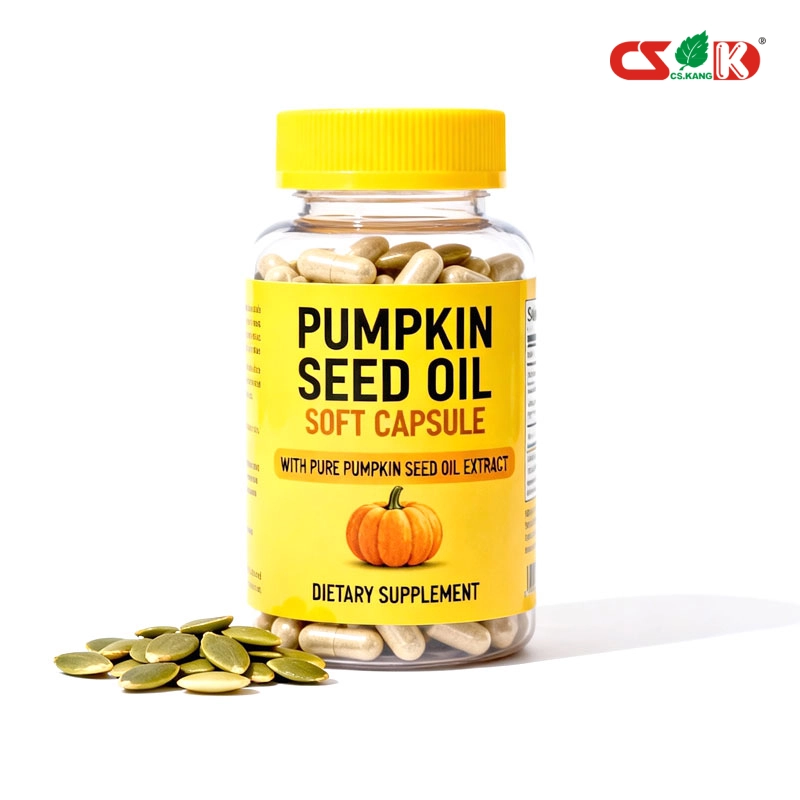
Cold-Pressed Pumpkin Seed Oil Capsules: Rich in Zinc, Phytosterols & Fatty Acids
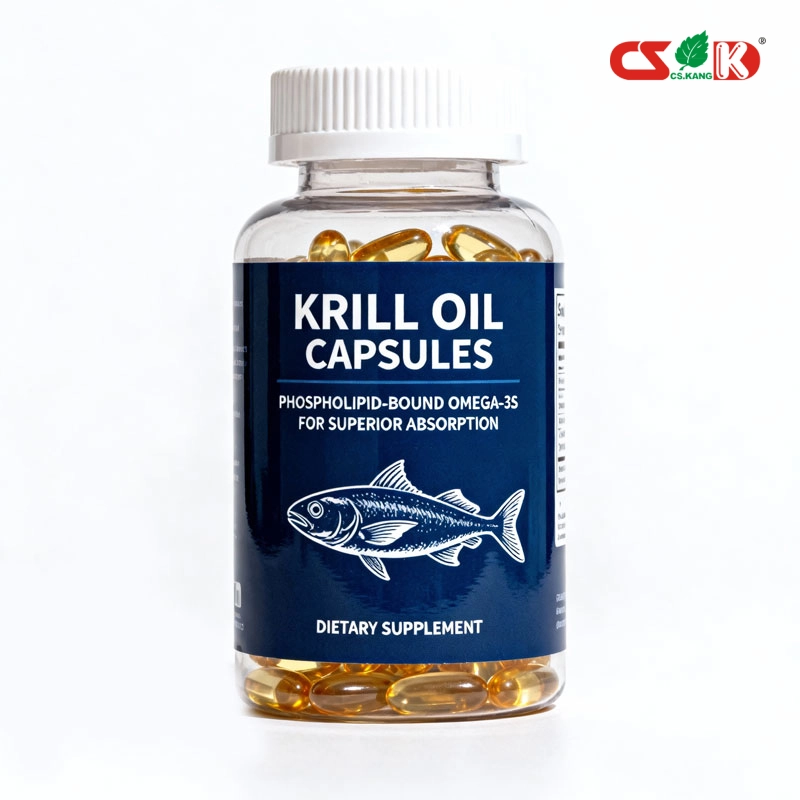
Supports Heart & Brain Health: Krill Oil Rich in EPA & DHA
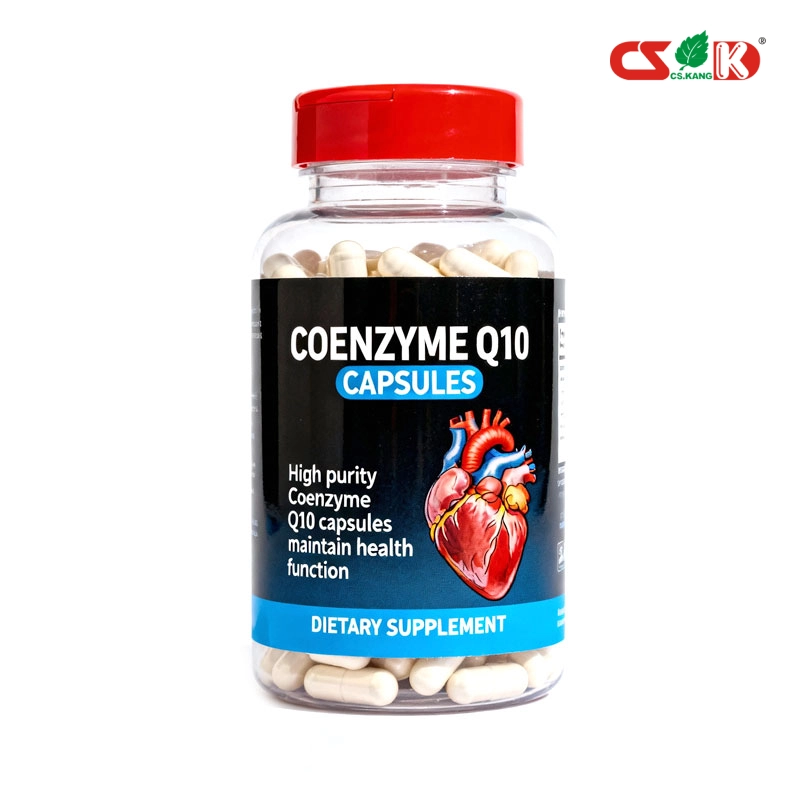
High purity Coenzyme Q10 capsules maintain heart health function

manufactoryinchina
CSK Biotech Dietary Supplements